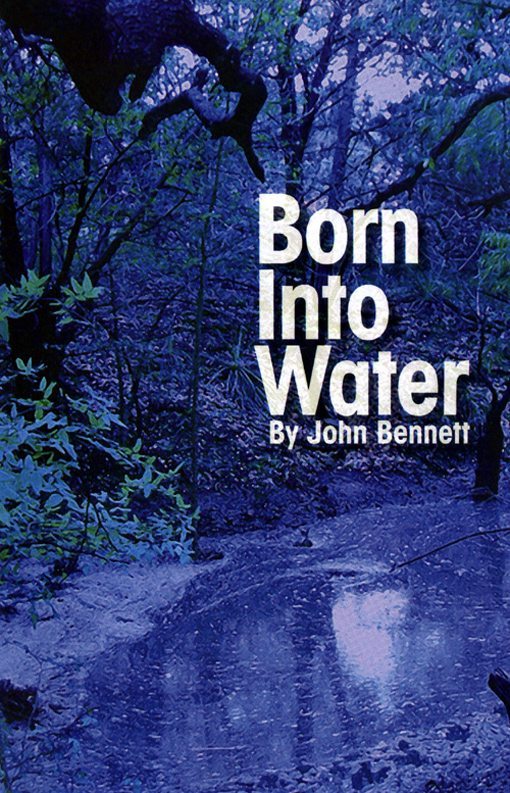
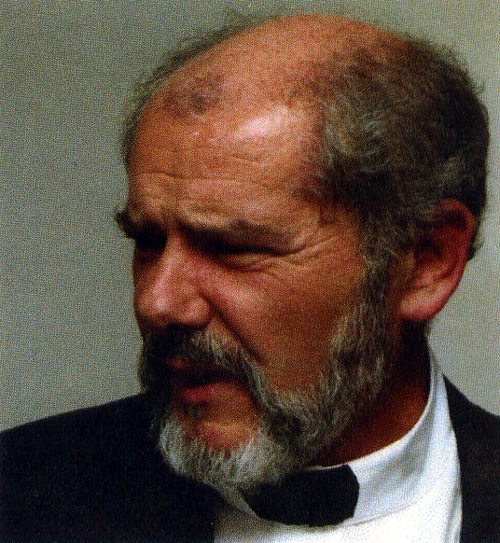
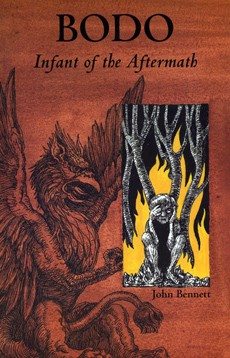
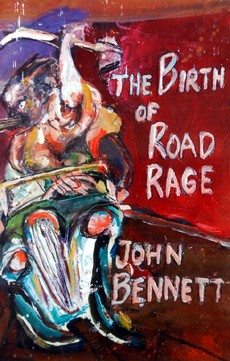
ISBN: 978-0-9776783-9-6. Cover art & book design: Chris Yeseta. Author photo: Mert Sarte (page 77). All rights reserved, including the right to reproduce this book or portions thereof in any form without permission from the author, except for brief passages used in reviews. HCOLOM PRESS (formerly Vagabond Press) 605 E. Fifth Avenue Ellensburg, WA 98926
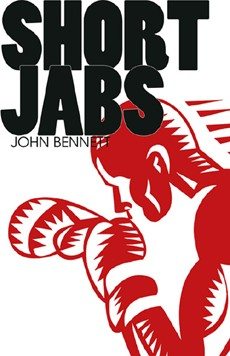
Some of these short jabs have seen previous publication in: Battle Scars (Kamini Press), First Class 48th Street, Press Lilliput Review
Chrisitan Pietry
Stuffing his
ire at the
renegade heathen
the pastor
faked a
smile & a
soft laugh &
went home to
fuck his wife
ten times harder
than usual.
Sex Dreams
The best
thing about
a sex
dream
is you
wake up
alone.
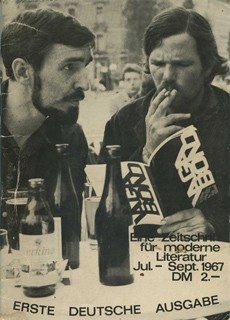
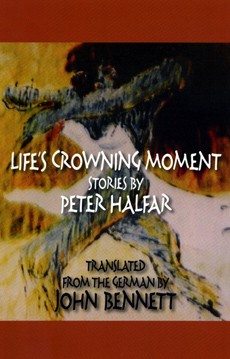
I FIRST MET PETER HALFAR IN THE FALL of 1965 in Munich, Germany, where I began publishing Vagabond, a literary magazine. Maria Spaans, from the Netherlands, was art editor for the first two issues, and Peter followed in her footsteps. Five issues of Vagabond were published in Munich before I shifted the enterprise to New Orleans, and in that time Peter, Maria and I became close friends.
Peter’s favorite word is unheimlich. It colors his art and his outlook, and in the sense he means it, unheimlich translates as a quirky, sometimes playful, sometimes foreboding surrealism. The unheimlich permeated the pages of the early issues of Vagabond.
Peter, Maria and I went our separate ways after I left Munich, but we never fully lost contact, and when I returned to Europe for a visit in 1986, I saw them both. Maria was married and living in Paris, and Peter was still living in Munich. But he had become something of a world traveler since I last saw him, and it showed in his art, which was flourishing. And something new had been added. Shyly, on the last day of my visit, Peter pressed a thick folder into my hands. “Stories,” he said. “I have been writing stories. Unheimliche stories!”
I read them on the plane home. They were good. And a few years later, when I was bed-ridden with a bad back, I began translating them and, to Peter’s delight, getting them published.
Life’s Crowning Moment is comprised of thirteen of those translations, and Maria Spaans, now Maria Sail, using the phone and her fluency in four languages, greatly facilitated things by acting as an intermediary between Peter, myself and several other involved parties in Europe.
It’s been wonderful working with them both again. — John Bennett
FORWARD
Life Goes On:
Insights into the Art of Peter Halfar
by Arwed Vogel
(translated and edited by John Bennett)
IN AN AGE WHERE COMMERCIALISM HAS a death grip on the arts, an age in which so many writers conform to the dictates of the market place and leave their writing vulnerable to the whims of supply and demand, Peter Halfar goes his own way.
Halfar is an accomplished painter and draftsman as well as a writer of short stories, but whether reading his stories, looking at his paintings, or engaging him in conversation, doors open onto unexpected perspectives.
There are thirteen stories in Life’s Crowning Moment, each beginning in a commonplace setting (supper with friends, a chance encounter, a trip, a boy playing in the yard) but quickly evolving into the world of the unheimlich, an eerie world of shadows into which the reader is drawn. The author’s thought process spawns images that form storyboards and then are cut up and spliced into other images, other storyboards, the process feeding on itself. Apparently disconnected fragments are quickly and disconcertingly thrown together, and yet they are not disconnected, they are bound together by an inner force that runs through the writing. The reader is carried through this strange landscape by the force of Halfar’s insights, and then, at the story’s conclusion, gently released back into ordinary reality. And life goes on. Life goes on, says Halfar, a current of belief that runs through his writing and art.
The horrors of Fascism that he experienced in childhood exert a strong influence on much of Halfar’s work. Another influence is the cinema, and a prevalent theme is that of the diva—Tina Turner, Rita Hayworth, Patricia Highsmith and Marlene Dietrich are among his idols that appear in much of his writing and art. But there are other strong women with lower profiles who find their way into his stories, as in “The Lizard,” “The Night Marilyn Monroe Died,” and “The Queen’s Jubilee.”
Peter currently lives in Munich where he continues to paint and write, because, as he says, to create is to bring meaning to life.
About Arwed Vogel
Arwed Vogel studied in Munich and London and for the past twenty-five years he has been a professor of creative writing and poetry at the Ludwig-Maximilians University in Munich. His tales, short stories and poems have been translated into numerous languages. His first novel, “Die Haut der Steine,” was published in 2003. He has done translations and has collaborated on numerous autobiographies. He is a board member of the Bavarian chapter of the German Writers’ Union.
Drawing by Peter Halfar
STINGING NETTLES
I AWOKE early, slipped into my coveralls, and went barefoot down the stairs through the dusky house. I stood in the open doorway, looking out into a thick haze that lay over the garden plots and fruit trees. The birds had not yet begun to sing, and the newly-risen sun drifted through the early-morning fog. I slipped the straps of my coveralls over my shoulders and went down the porch steps and across the damp grass in the direction of the rabbit hutches.
The rabbits sat still as stone in their cages, as if stunned by the fragrance of the blossoming jasmine and lilac bushes that surrounded them. Soon I would take another batch of females for mating, carrying them in a large canvas bag with a zipper at the top. The last time they all escaped because I’d left the bag unzipped out of consideration for their ears. I chased them down, terrified that I would not be able to catch them all.
The back of our house was at the bottom of a long grassy slope with elevated stone steps winding up to street level, and underneath these steps was a small, dark manger. As my eyes adjusted, I saw a thrush inside the manger, snuggled in some hay, its head turned in profile, its stern eye studying me fixedly.
I wandered on, past the beds of red and flesh-colored dahlias, breathing in their bitter aroma. I leaned over the edge of the half-moon wading pool and spit into the water. My reflection trembled and then dissolved into an expansion of quivering concentric rings.
Arriving at the front of the house again, I saw that the door was ajar. A dreamy feeling came over me. I was certain I’d closed the door when I went out.
A dark shape drifted into my peripheral vision. It was the speckled hen, perched on top of one of the pillars that stood on either side at the base of the steps leading up to the house. It waited there every morning for me to scatter grain, but today it seemed nailed in place, its head lolling from side to side.
A dread came over me, a feeling of deep despair. I dropped the wooden sword I’d been given for my birthday and with which I was planning to attack the stinging nettles that had taken over a large portion of the back garden. Whenever my father was home and he caught me in my bathing suit near the back garden, he’d grab hold of me, lift me high in the air, and toss me into the nettles. He wanted me to be a man, a hero, but I would much rather have been a farmer, surrounded by chickens and pigs. And so I ran off covered with stinging pustules to cry alone, not understanding anything, my world in chaos.
I hesitated at the open door before stepping into the dimness. The house was deathly quiet. I went silently past the kitchen where a large covered pot stood on the stove. I passed the wall closet in which I often hid for hours, and then I went past the basement stairs.
The steps leading to the upstairs bedrooms were cool under my bare feet. The bedrooms were empty, the beds unmade. As always, I paused in front of the fireplace over which hung a Rubens reproduction, an abduction scene of naked women, their heavily-jeweled arms raised in supplication.
There was a wardrobe in the bedroom that had been pulled out from the wall far enough so that I could squeeze behind it. From there, standing on my tiptoes, I could reach the empty socket of a wall lamp. I would stick the tip of my finger in the socket, and as the weak current pulsed through my hand, I wasn’t certain if I was experiencing pleasure or pain. The one thing I did know was that I must never tell my mother about my adventure, because whatever I was feeling, it was far too exiting to be allowed.
I stepped out onto the balcony and leaned back into the ivy that covered the entire house. On the far side of the garden, on the balcony of our neighbor’s house, the deck chair was empty. A stunningly beautiful young Czech woman often sunbathed naked in the deck chair, and if she happened to catch me watching her, she always nodded and smiled.
A fly landed on my arm, but before I could swat it, it flew off into the house, into the Chinese Room with its exotic tapestries, one entire wall devoted to a shock-red flag with a runic swastika in a circle of white at its center.
I stepped back into the hallway, and that’s when I saw them, next to the bathroom door, a pair of highly-polished jackboots. I knew then that my father had returned.
I glanced down the stairs before quietly opening the bathroom door. The first thing I saw were his clothes, heaped and tangled on the tile floor. And then I saw my father through the heavy steam, naked in a full tub of water, his head back against the rim of the tub, his eyes closed.
The expression on his face — it was as if he was about to cry. — Peter Halfar
Peter Halfar | Photo by Frank Schellmann
EPILOGUE
THE YEARS ON THE GREEN BANKS OF THE Isar have faded away, and I’ve become an old man. But the older I become, the better I paint and write, which for me is a necessity of survival.
I’m not an intellectual, and I don’t work from the gut. I wait for an impulse, and when it comes, it’s as if someone threw a pail of scalding water in my face, and I immediately begin writing or painting.
People who incessantly share their problems with me so that I may share their unhappiness are the raw material for my stories and paintings. That and my own difficulties, of which I have an abundance. I am, for example, tortured by chronic fear, and I delight in it!
But I am hungry for life and I strive for happiness, which isn’t always that easy to come by. — Peter Halfar
Acknowledgments: Black Messiah gratefully acknowledges the following for their part in making this publication possible: Quality Typesetting, Ashland, Oregon; Record Printing, Ellensburg, Washington; McNaughton & Ounn Lithographers, Ann Arbor, Michigan; Colorhouse, Minneapolis Minnesota; Emil White, Big Sur, California; and Doug Martensen, Ellensburg, Washington.
A very special thanks to Noel Young of Capra Press for his generosity in providing us with invaluable information, advice and material for this special Henry Miller issue.
Patrons: Patrons are welcome and very necessary. We do not take NBA, CCLM or state arts council money. If you like what we’re doing, lend a helping hand by sending any amount you can afford in excess of the price of a normal subscription. $100 or over makes you a lifetime patron. Patrons to date: Justino Balderrama, Harriet Dolphin, Frank T. Evans, John D. McCall and Paul Swetlik.
Subscriptions: Black Messiah will be published on an irregular basis, approximately three issues a year. Subscriptions are $12 for three consecutive issues. Single copies are $4.50. Available from VAGABOND, 1610 N. Water St., Ellensburg, WA., 98926.
Photo Credits: Front Cover: Henry Miller watercolor, photo by Gail Mezey, courtesy Capra Press. Back Cover: Henry Miller in the doorway of his study at his home on Partington Ridge, Big Sur, September 1951. Photo Copyright 1977 by Robert Young, Jr. Courtesy Capra Press. Page 1: Black & white reproduction of a 1968 Miller watercolor of an anonymous friend, titled “The Third Eye.” Courtesy of Capra Press. Page 2: 1942 photo of Miller. Courtesy of Val Miller/Capra Press. Page 9: Caricature by Brassai, 1931. Courtesy Capra Press. Page 17: Photo by Jaime Snyder. Courtesy Capra Press. Page 19: Newspaper clipping photo. Page 24: Photo by Emil White. Courtesy Capra Press. Page 29: Photo by Robert Sheldon. Courtesy Capra Press.
BLACK MESSIAH
Fear, hydra-headed fear, which is rampant in all of us, is a hang-over from lower forms of life. We are straddling two worlds, the one from which we have emerged and the one towards which we are heading. That is the deepest meaning of the word human, that we are a link, a bridge, a promise. It is in us that the life process is being carried to fulfillment. We have a tremendous responsibility, and it is the gravity of that which awakens our fears. We know that if we do not move forward, if we do not realize our potential being, we shall relapse, sputter out and drag the world down with us. We carry Heaven and Hell within us; we are the cosmogonic builders. We have choice — and all creation is our range. — Henry Miller Sexus (1945)
CONTENTS
Remembering Henry Miller – Jack Saunders – page 12 | Henry Miller—Dead? – Alfred Perles – page 14 | An Appreciation of Henry Miller – Norman Mailer – page 17 | The Pajama Man – Curt Johnson – Page 18 | Phoenix Day – John Bennett – page 20 | Speaking Well of Whores and Henry Miller – Charles Campbell – page 24 | Uncle Henry – Noel Young – page 27 | Henry Miller/Thomas Berger Correspondence | Goodbye to Henry-san – Erica Jong – page 34 | poems – Gerda Penfold – page 38 | Chimborazo (a story) – Dennis Lynds – page 44 | Why, We’re Here – Curt Johnson – page 49 | Wide Open (a story) – Jerry Bumpus – page 53 | Donn Pearce (an interview) – Jack Saunders – page 61 | The Charles Manson Dilemma – John Bennett – page 66 | Cooking – John Bennett – page 69 | Rhinestone Cowboy (a story) – John Krich – page 72 | I Coulda Been on the Moon – Jim Orem – page 75 | poems – Gary Allan Kizer – page 80 | Baby Driver (novel excerpt) – Jan Kerouac – page 84 | Quitting – Jack Saunders – page 88 | Henry Miller Chronology – page 94 – Erotic woodcuts by Richard Denner. Photos compliments of Capra Press.
EDITORIAL POLICY
Dictatorial. Black Messiah’s editorial policy is dictatorial. That is to say, creative. Black Messiah is elevating the editor’s place in the scheme of things to a creative level. Which is, as any poet will tell you, a dictatorial level. Poets don’t discuss, they tell. And if they are skill-ful and succeed in getting their message thru, they nail you to the wall. If they don’t succeed, they go into a rage, storm away, sulk. This is as it should be. There are enough people sitting down and reasoning together.
It should not be assumed that because Black Messiah’s editorial policy is dictatorial that it is also narrow. We’re wide open. We’re powered by a vision. We’re not sure what the vision is. Visions are like that. They do a slow strip tease. They play to a rapt audience, half of which is bleary-eyed drunk before the final veil falls away. That’s the way the cookie crumbles. The universe explodes. The universe is like a vision, like a strip tease artist. We exist somewhere in the middle of a cosmic explosion, even science has discovered that much. Don’t unpack the car, Martha, we won’t be staying here that long.
We’ll tell you what we think if you’ll do the same. Anger is not ruled out. Harsh words and even rage are acceptable. Confusion and misunderstandings are unavoidable. Grudges are taboo. Petty spite is a no-no. Think of time as a commodity much rarer than gold and act accordingly. But not myopically. Another no-no. No myopic action in the fast lane. Everyone who sends a photograph of himself or some member of his family demolishing a television set receives a free subscription to Black Messiah. I think that pretty much covers it. — Editor
THANKS TO Mike Schapiro for suggesting the tide of this book. A very special thanks to Vince Silvaer, Jack Micheline’s son and founder of the Jack Micheline Foundation for the Arts, and to Matt Gonzalez, publisher of Micheline’s last book, Sixty-seven Poems for Downtrodden Saints; Ragged Lion would be a shadow of itself if it hadn’t been for their generous sharing of information and material. Thanks, too, to Len Fulton of Small Press Review for furnishing mailing lists; to A.D. Winans, who chipped in beyond the call of duty; and to Wayne Miller for his “Wild Bunch” photo collages.
CREDITS: A number of poems and prose pieces in Ragged Lion were written for and/or read at one of two memorials for Jack Micheline in March of 1998 — one in New York City, the other in San Francisco. In addition, some pieces saw previous publication in: Beat Scene; Big Scream; Bloomsbury Review; The Burial of Longing Beneath the Blue Neon Moon; Chiron Review; Jawbone; Next; The Vagabond Anthology. There are a number of photographers whose work appears in these pages; they have been credited in captions accompanying their photographs. The captionless photograph on page three of Micheline playing harmonica was taken by Jim Lang.
Front cover photography: Steve Wilson. Cover design: Dick Elliott. Rights to material in this book shall revert upon publication to the individual authors, artists and photographers who created it. Editor: John Bennett. Layout: Jeff Cleveland. Library of Congress Catalog Card #: 99-070926 – ISBN: 0912824-39-5 (cloth) – ISBN: 0912824-40-9 (paper)
ANOTHER ONE BITES THE DUST
(a few words on how Ragged Lion came about)
On February 27, 1998, Jack Micheline, America’s quintessential street poet, died on a BART train in the San Francisco Bay Area. I got the word from Al Masarik before the obits hit the papers. “Another one bites the dust,” said Al.
The Beats and kindred spirits are dying off like flies—Kerouac, Cassady, Henry Miller, Bob Kaufman, William Wantling, George Montgomery, Bukowski, Burroughs, Jesse Bernstein, Ginsberg, Micheline and—on November 3, 1998, a little more than eight months after Micheline’s death—Ray Bremser.
A few days went by with Jack knocking around in my head, and then one morning I rolled a sheet of paper into the carriage of my old manual typewriter and wrote the following:
Someone to speak to. Someone to call my name. Someone to whisper sweet nothings down Ihe dark corridors of time. Someone to rock me in generic arms and coo I’m blameless. A splatter of paint. Graffiti. Antimatter. Kenneth Patchen grey matter, like San Francisco fog. Bob Kaufman, gurgling blood and silence in a North Beach alley. Jim Gustafason wrapping dead Indians in surplus army blankets. One little, two little—there goes my baby with someone new. He sure looks happy. Once in a blue moon, the good guy gets the girl.
The tie that binds. Railroad ties in a heat-shimmering Methedrine Mexican afternoon. Countdown. One little, two little—no one really knows what made Neal tick.
We’ve all been made. Disfigured by the Man. Fast-changed by death. Kerouac with his head in a toilet, puking dreams. Burroughs with his cats and hand guns in a Kansas City cul-de-sac. Little Alien, strangely innocent in spite of his naughty tricks. The legions, the invisible army, rocking off to battle on the Midnight Express. Storm troopers of a beat generation. One little, two little…
So what the fuck, Jack. A pretty classy way to cash it in. Rocking along on the train, the rhythmic clacking of iron wheels on iron tracks. The California that you loved so well, rolling by outside the window, your own sun-radiant reflection, ghost-like in the glass, floating over the passing landscape. And then the first stab of pain knifes you between the ribs. You grimace. Your own eyes smiling back at you from the tumbling dream of California, the last thing you register.
That should have been it. I should have typed up clean copy of what I’d written, stuck a title on it, and sent it off to some obscure little magazine. But I didn’t. Instead I decided to publish a tribute. Don’t ask me why. I’d only met Jack Micheline twice in my life, the first time in 1976 at a book fair at Fort Mason in San Francisco where I had a booth.
We arrived simultaneously at the same check-out stand in a nearby grocery store, Jack with a gallon of red wine, me with a half rack of beer. We glared at each other, wondering who was going to step up to the register first, until the glares turned into grins and we began to laugh. We went into the “you first…no, no, you first” routine, and then we were out of there and walking back to the book fair on opposite sides of the street.
The second time was at Vesuvio’s in North Beach. I had moved to Washington state by this time, and I was back in the Bay Area on a visit. Grant Bunch and I were seated at the bar, leaning into each other, and sparks were flying—we’d been drinking non-stop for three days. We were insane, we had always been insane. We dreamed up Vagabond together over a pitcher of beer in a place called Brownley’s in Washington, D.C. a decade earlier, and we’d been drinking from D.C. to Munich to New Orleans to San Francisco ever since. We were like two black holes engaged in a tug-of-war, Grant and I, and the plan that was shaping up in my head was to get into my big Chevy 360 and fast-lane it back to Washington that very night—which I did. Micheline was holding forth at a crowded nearby table, reciting poems, gesticulating, loud. And then, as if by magic, he had his arm draped over my shoulder and was up close, looking me straight in the eye. “Don’t do anything stupid,” he said, and was gone again.
There aren’t many people who pay that much attention to what goes on around them, especially in a crowded bar where they’re holding forth, and maybe that’s what put the idea in my head for a Jack Micheline tribute—the significance of those two encounters.
I got in touch with Harry Smith of The Smith Publishers in Brooklyn, and we joined forces, making Ragged Lion a Vagabond/Smith Publication. We started by contacting a handful of poets from the old days, hard-core veterans of the small-press wars, part of what Hugh Fox, taking his cue from Charles Plymell, has been calling The Invisible Generation. Most of them responded, some with suggestions of other people to contact, people who had known Jack personally, people, largely (but by no means exclusively) associated with the Beats.
Each lead led to two or three more, and soon a labyrinth opened up before me. Jack Micheline had an intricate network of friends, acquaintances and connections across the country and around the world, hundreds, possibly thousands of people quite often unaware of each other but always imbued with the belief that they’d had an intimate relationship with Jack. Jack was good at the white-magic con (he had to be to survive forty-plus out of 68 years as a poet on the streets of America); but I don’t think he conned these people. I think he did have an intimate relationship with each and every one of them. I think he had an intimate relationship with everything and everyone he came into contact with.
The enormity of who Jack Micheline had been came crashing down over the simplicity of my original intentions. Material began pouring in, poems, paeans and recollections of outrageous behavior, and I soon realized I was in over my head. Jack in Israel, tilling the soil. Jack in Holland, where they treated him like some sort of hero. Jack in Spain, borrowing money from William Saroyan. Jack in Chicago with the one-armed Eddie Balchowsky. Jack in Mexico, painting with Rick Librizzi, bankrolled by Franz Kline. Kerouac writing an intro to Jack’s first book of poems, and James Baldwin introducing him to the editor of Dial Press; Jack walking away from it all. Jack getting married with an inebriated James T. Farrell as best man. Jack on the Conan O’Brien Show with his sax man Bob Feldman. Jack receiving the “Revolt in Literature Award” from Nat Hentoff, Charles Mingus and Jean Shepard. Jack presented “The Most Valuable Performance Award” by Ken Kesey at the Naropa Institute’s 1982 Jack Kerouac celebration. Jack dancing around a table and drinking magic water with Charlie Mingus and an old man he met on the street. Jack wearing for one long New York winter a woman’s coat with fur collar—it was a freebee and beat freezing to death. Jack strolling with Frank Lloyd Wright on the grounds of Taliesin in Wisconsin. Visiting Charles Olson. Bringing a prostitute to Bukowski as a present, Bukowski locking himself in the bathroom and not coming out until they left. Jack at the track, betting his last dollar. Jack at the Aquaduct Racetrack in Queens, pulling down a $5,600 trifecta. Jack not bothering to take the plastic wrapper off a motel-roorn glass before drinking from it. Jack with over 100 suitcases of hodgepodge and treasure stored here, there and everywhere. Jack writing, always writing, and painting, painting, painting—on this, that or anything. Living in skidrow rooms. Crashing on people’s couches and floors. Reading in North Beach and New York, in Denver, Los Angeles and New Orleans and points in between, his voice thunder, holding audiences in the palm of his hand. Jack with Janice Blue, Bob Kaufman, Gene Ruggles, Kell Robertson, Wayne Miller and the downtrodden multitudes. Jack near the end in his painted room in the back of Abandoned Planet, Scott Harrison’s Mission District bookstore, chain-smoking, impatient and game; death had come courting, showing some leg, fluttering her lashes. “Let’s do it,” Death said. “Hold your horses!” said Jack. “I’m not done dancing…”
Jack Micheline was more than a poet, a bard and a wandering minstrel. He was more than an artist and con man. He was Walt Whitman’s wild child who—after forty years of defiantly dancing on the cutting edge of life—had not been broken, even though he had been rendered toothless, ragged, diabetic and frayed by a society that goes hard on those who don’t kneel to reason, bow to the pragmatic, and prostrate themselves before authority.
It’s a bawdy, disparate, sometimes contentious and by no means all-inclusive crew marooned in the pages of Ragged Lion. There are numerous people not represented here who by all rights should be; they’re missing not out of malice but due to the constraints of time, limited resources, and various other vagaries of life; they’re here, nevertheless, I would hope, in spirit.
Ragged Lion is a celebration of Jack Micheline’s existence, which (from all indications) is still going strong, somewhere out there beyond our wildest dreams. — John Bennett Ellensburg, Washington January 25, 1999
Jack Micheline on the prowl in San Francisco | Photo by Ed Buryn
CONTENTS
MATT GONZALEZ, JOHN BENNETT, BRUCE ISSACSON, BOB FELDMAN, JACK HIRSCHMAN, IRA COHEN, HERSCHEL SILVERMAN, KAYE MCDONOUGH, RICK LIBRIZZI, MARTIN PAJECK, RUTH WEISS, LATIF HARRIS, JANICE BLUE, ANDY CLAUSEN, JOHN LANDRY, ED BURN, STEVE DALACHINSKY, LINDA LERNER, NONI HOWARD, TONY MOFFEIT, JOEL SCHERZER, CATFISH MCDARIS, FRED VOSS, MICHAEL MCCLURE, BEN GULYAS, VAMPYRE MIKE KASSEL, PETER CHELNIK, JULIA VINOGRAD, JANINE POMMY VEGA, VOJO SINDOLIC, ALBERTO HUERTA, WAYNE MILLER, LAWRENCE FERLINGHETTI, JEFFERY WEINBERG, CARL MACKI, R.B. MORRIS, MAJ RAGAIN, SAINT TERESA STONE, RAFAEL F.J. ALVARADO, LINDA KING, JIM LANG, SA. GRIFFIN, MATT GONZALEZ, FLOYD SALAS, CHARLES PLYMELL, A.D. WINANS, NEELI CHERKOVSKI, F.A. NETTELBECK, ANN MENEBROKER, CHARLES POTTS, KELL ROBERTSON, AL MASARIK, BEN L. HIATT, HARRY SMITH, KENT TAYLOR, T.L. KRYSS, TODD MOORE, LYNNE SAVITT, DAVID PLUMB, RICH MANGELSDORFF, HUBERT SELBY, JR., MAIA PENFOLD, ALBERT HUFFSTICKLER, JACK SAUNDERS, ART BECK, HUGH FOX, JACK MICHELINE, BRENDA SCHIFF, VINCE SILVAER, ALAN KAUFMAN, DAN SHOT, CHARLES GONZALEZ, SCOTT HARRISON, S.S. RUSH, JANICE BLUE.
Jack Micheline spoke to the poet in everyone in an age when business is usual and poetry a sideshow. He was authentic street and so we are witness to the voice of one undefeated. — Jack Hirschman
Despite cliches and sentimental platitudes Jack Micheline’s poetry is at times deeply moving. Like the great singer/performer Edith Piaf he was self-taught and an inspired naif. Both were street people and both had the rare gift of mesmerizing and moving an audience. Jack was totally enthralling on video or before a live audience. He was touched with genius. — Harold Norse
Jack Micheline: gregarious, boisterous, unstoppable, his energy, edgy optimism and righteous anger gave him a high-octane approach to life. Over the years, he endured, scrambled in the margins, grumbled against the suits who ran everything but couldn’t touch the freedom to write and paint his heartful, tender ire and optimistic resilience. Like one of those club fighters up against the ropes, Jack always rallied to win another fight. — David Meltzer
From the introduction to Ragged Lion:
Jack Micheline was more than a poet and an artist. He was Walt Whitman’s wild child who—after forty years of defiantly dancing on the cutting edge of life—had not been broken, even though he had been rendered toothless, ragged, diabetic and frayed by a society that goes hard on those who don’t kneel to reason, bow to the pragmatic, and prostrate themselves before authority.
Ragged Lion is a celebration of Micheline’s existence, which— from all indications—is still going strong, somewhere out there beyond our wildest dreams. — John Bennett
“You’ve fought a harder, cleaner fight than anyone I know.” — Charles Bukowski
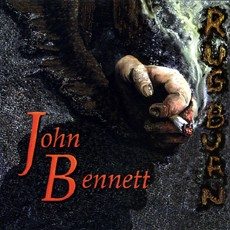
Cover Art: Scott Mayberry. LAYOUT & DESIGN: Jeff Cleveland & Scott Mayberry. All shards written and read by John Bennett. All beats by Seed Verb except: The Audience, Seed & Mike Elkins; Choosing, Seed & Nervous; CIM, Nervous; Leeboy, Lee McCullough & Nervous; Snake Skin, Nervous. Seed Verb and Nervous appear courtesy of Puppetfangghost.
Some of the shards on this CD have appeared in written form in the following books and magazines: Books:Domestic Violence; New World Order. Magazines: First Class; Pudding; Pulpsmith; Lost & Found Times. Copyright 1999 by John Bennett. A Vagabond Production, 605 E. 5th Ave., Ellensburg, WA 98926. Produced at the Bombshelter, Ellensburg, Washington, by Seed Verb, Nervous and John Bennett.
Tracklist: 1. Only Business 2. Choosing 3. The Audience 4. A Bird’s Eye View Of The Problem 5. Feel Up (Instrumental) 6. Blowing The Lid Off 7. Costello: The God Of Creation 8. Cim (Instrumental) 9. Ghetto Poem 10. Let Them Eat Biscuits 11. Much Ado About Nothing 12. Russ (Instrumental) 13. A Pep Talk To The Class Of 97 14. Snakeskin 15. Junkyard Dog 16. Leeboy (Instrumental) 17. Ascent Of Man 18. Molecular Conspiracy
listen to John Bennett | Only Business
This recording is also available in download format MP3 by clicking here…
Photo by Sean Maupin
BALLAD OF A SHARD WRITER
I hit the road when I was ten. Carnival gigs and fruit-tramp days. Shady doings in South Philly and Cleveland. The army shot me straight off to Nam. I was the only tunnel rat over six feet tall, a contortionist from the school of hard knocks. I spooked the hell out of Charlie. For the first time in my life, I was grounded in purpose.
But good things never last. I hit the streets when the war crashed and burned, and the next thing I know l’m on a chain bus to prison. By the time I got out, I was rug burn all over. It’s what happens when you get dragged naked over life’s carpet by the hair, by the heels, by betrayal.
I know this next part is hard to believe, but one night a princess came down from the sky and began spinning spells around me. It took years, but when she’d finished, my skin had grown soft as a baby’s. Then she rode off without warning on some prince’s white charger. That’s when I began writing shards. A shard is a knee-jerk reaction to rug burn. A blowtorch in the face of betrayal.
This CD contains a selection of spoken shards, jazzed up by the musical imaginations of Seed Verb and Nervous, two cats from the rap group Log Hog. Happy listening. — John Bennett
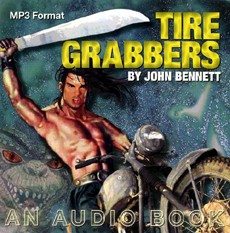
Tire Grabbers
by John Bennett (c) 2011
A Novel by John Bennett. Read by the Author.
Tire Grabbers is the story of the coming of Moloch, a horrific force that mutates out of the Era of the Great Schism and – feeding on spiritual marrow – threatens Mankind’s extinction. And it is the story of the children who challenge Moloch, with their innocence and with an army of mind creatures that they eject into the outer world and call…
Tracklist: PART I: The Awakening (track 1) PART II: Spiritual Limbo (track 4) PART III: Exile (track 11) PART IV: Journey Into Myth (track 28) PART V: The Reign Of Moloch (track 38) Total Time: 1 hour 20 minutes
Mastered at Shofar Sho Good Studios. peytonmusicatgmail.com | This is an MP3 formatted disc.
listen to John Bennett | Tire Grabbers – The Awakening (5 minutes excerpt)
“People who think there is a difference between the past, the present and the future are living in an illusion.” Albert Einstein
“it breathes in and out, it is all lungs and heart and brain, story telling at its best!” – Ann Menebroker, Sacramento, California
“Tire Grabbers is a rambunctious, ramshackle whale of a novel…” – Jim Feast, Evergreen Review
“Tire Grabbers is poetic speculative fiction at its best…” – B.L. Kennedy, Snakeskin Review
“Rarely do post-Joycean novels so boldly create language and confront history…” – David Milholland, President Oregon Cultural Heritage Commission
“The writing is edgy, fast-paced and thoroughly engaging…” – Mark Terrill, Small Press Review
This recording is also available in download format MP3 by clicking here…
Beam Me Up Scotty
Recently I read my novel Tire Grabbers into an audio format in a sound studio. It took weeks.
“We’ll produce it as an MP3,” the Studio Director said. “Less expensive.”
“Good idea,” I said.
“It will be one disc instead of seventeen,” he said.
“Excellent,” I said.
He gave me an MP3 disc to take home and audio proof, and when I stuck it in my CD player, nothing happened.
“It doesn’t work,” I told him over the phone.
“What do you mean?” he said.
“It doesn’t play,” I said.
“It should.”
“Well, I put it in my CD player and nothing happened.”
“That’s because it’s not a CD,” he said.
“What?” I said.
“It’s an MP3 disc. You need an MP3 player.”
“It looks like a CD to me,” I said.
“Listen,” he said. “Put it in your computer and download it into iTunes.”
“What?” I said.
“Then you can play it,” he said.
I did what he told me and fifty files popped up. I had to play them one at a time, so there was no way to test for continuity. Seventeen CDs was beginning to sound like the way to go, and I called the Studio Director and told him so.
“No, no,” he said. “You just need an MP3 player. I’ll loan you mine, come by the studio in the morning.”
He was in the control booth when I arrived, and he signaled thru the glass that he’d be with me in a minute. He was all smiles when he came out.
“Sorry about the confusion,” he said.
“No problem,” I said.
“Here,” he said, and took something out of his shirt pocket the size of a candy bar. “I’ve got earphones, too,” he said.
“What’s that?” I said.
“My MP3 player,” he said.
“Is this some sort of joke?” I said
“What?” he said.
“You can’t get a disc in that,” I said.
“What’s wrong with you?” he said.
“What’s wrong with you?” I said.
We stared at each other across a yawning chasm of technology, his face a mix of impatience and alarm.
“Trust me,” he said. “Remember how I told you to download the disc into your computer?”
“Yes,” I said.
“Well, now you download what’s on your computer into the MP3 player. The tracks will cue each other, it will play with continuity. That’s how it works.”
“How can someone play it in their car then?” I said. “That’s where people listen to audiobooks, in their cars. On their CD players.”
“They burn CDs from the files on their computers,” he said.
“Burn CDs?” I said.
“Yes.”
“It’s too complicated,” I said. “No one’s going to go thru all that.”
“You’re wrong,” he said. “People do it all the time.”
I walked around for a week with plugs in my ears and the MP3 player in my shirt pocket and listened to my fantasy novel about an inhospitable future on a device from that future, and when I was done I sat in the dark smoking and staring out the window at the moon.
“Beam me up, Scotty,” I whispered, and wondered how long it would be before that would be possible.
John Bennett
Below, an in-depth analysis of Tire Grabbers by Richard Livermore — well worth the read. Richard Livermore is a poet and essayist living in Edinburgh, Scotland. He is also the editor of the highly respected literary journal Chanticleer Magazine.
The Politics of John Bennett’s Fictional Parallel Universe in his new novel, Tire Grabbers by Richard Livermore
Question: How do you write a novel which, while still being a novel and not a political tract, does justice to all the shit which is going down in the world today without giving in to despair?
Answer: You don’t do it in the four-dimensional realist manner that Post-War novelists seem to have made their hallmark.
Question: Why not?
Answer: Because such forms of realism lack the necessary mythic dimension to take us beyond despair. So we have to develop some other method of presentation.
Swift was not a realist, neither was Tolkien. Nor, for that matter, are Marquez, Pynchon or Vonnegut. They allow the real world they live in to filter through into their fictional worlds through their imaginations, but they don’t describe it directly. Orwell’s methods were more realistic than the above writers. Orwell was primarily a journalist who lacked the imagination to present a thoroughgoing analogue of the world he saw emerging around him and take us beyond it. To do this, you need the higher-dimensional element of myth and magic–the “myth kitty” as the realist Larkin once called it–which is where John Bennett enters the picture.
Tire Grabbers, John Bennett’s most recent novel, cannot be paraphrased in our world terms. There is too much madness in his method for that. Certainly, he presents us with a recognisable parallel fictional universe, but one whose parallels exist on the level of resonance rather than direct reference to the world as we know it. Of course there are passages in the book in which he could be describing the world we inhabit, but he keeps these passages within the imaginative parameters of his fictional world. He is both writing about our world and yet not writing about it, and this allows his novel far more prophetic scope than it would otherwise have. Everyone, I think, would recognise the following passage as a description of the world we inhabit:
“Patrick stared at the thousands of skeletal fingers clawing the sky from the rooftops of Los Angeles. He could sense them pulling generic images out of thin air and implanting them in the heads of millions of Homogenized People, each head filling with precisely the same set of images, rendering radio (which was rife with image anarchy) obsolete.”
That describes a phenomenon in our world alright, but it is no less a phenomenon in Bennett’s fictional universe; so it is in no sense an intrusion. These parallels underpin the novel, which is what makes it at times feel frighteningly relevant.
It is not my intention here to give a summation of Tire Grabbers as a novel (i.e., its narrative, plot, characterisation, dialogue, et cetera) from a literary critic’s perspective. What interests me is how the ‘real world’ we inhabit, and which is daily becoming more nightmarish, has filtered through into the imaginative cosmos of the novel. As we have seen, the ‘real world’ is not unrecognisable in the novel–indeed, in places it is all too painfully there–but it is transformed. Bennett is a writer of fiction and has a very clear idea of what that means for the momentum and coherence of his novel.
Moreover, Tire Grabbers is a work of epic dimensions, with its own mythic (cosmological) structure, its struggle between good and evil, its heroes and villains, all of whom engage you as complex characters in their own right.
The book in places borrows from popular culture, although it does so in non-nihilistic and intelligent ways. At other times, literary works like Paradise Lost and even The Iliad come to mind. Beyond all this, however, it is the work’s ‘political subtext’ which interests me. The rest can be left to the aforementioned literary critics.
***
In the beginning, according to the novel’s brief introduction, human beings live in The Age of Innocence, in which cosmic harmony prevails. (Notice the use of the present tense, which doubles here as the ‘eternity tense’.) This is followed by The Era of the Great Schism, in which Mankind splits into two factions–Hunters, who are locked down in a mind-set called The Hard World, and Dreamers, who develop magical powers that give them sanctuary in a parallel world called The Secret Place. In time the Reign of Moloch emerges, mutating almost willy-nilly out of the strife-torn Era of the Great Schism. This is the mythic background to the struggles which take place in the novel. Moloch is an autonomous force that feeds on spiritual marrow and threatens Mankind with extinction; a horrific force, rather like Tolkien’s Mordor, I think, though much more cosmic in scope. (The novel is also refreshingly free of the master/servant ethos of Tolkien’s epic.)
Moloch turns people into Drone Zombies, “individuals who are soul dead and stripped of all powers of discernment.” They are “known in The Secret Place as Lethargics.” Another but far from adequate term for this process might be “dumbing down.” It is what our present civilisation seems to want of its citizens and is secretly aiming for–unquestioning Drone Zombies whose individuality and rebellious spirit have been utterly quashed. Whereas in The Era of the Great Schism diversity was useful, because it was divisive, in The Reign of Moloch only homogeneity matters. Everyone must be reduced to the Same, while Difference becomes an expression of treason.
Thus:
“What is the biggest threat to our power?” Jacob Sandeno, head of Quality Control demanded of the Council of Uniformity.
“Diversity!” the Council sang in unison.
“Yes, diversity,” Jacob said. “We have myriad cultures in existence due to the great migrations over the millennia. We have different races, different languages, different just about everything. In the past, high-echelon Hunters have used this diversity to bring about strife and discord among the Drones and other sub-groups, thereby keeping the masses from realizing their situation and rising up against us. But that approach does not help achieve our current goals. Uniformity is what we’re after, sameness, predictability. And as cultures continue to collapse in on themselves and races intermingle, uniformity will be the end result, and our control will increase exponentially.” Who cannot see these processes emerging in our society? Bennett may only be projecting his vision onto his imagined universe, but sameness, predictability and control is the name of the game in our world as well. We seem to be headed for our own version of The Reign of Moloch.
The Independent recently ran an article about the surveillance society and police state that is emerging in Britain (and no doubt in Bennett’s own U.S.A.–it’s a global phenomenon). The pretext for this increased surveillance is The War on Terror, but the real underlying agenda is plain for anyone to see who is not willfully blind. The writer in The Independent used the analogy of the frog which–if thrown into boiling water–will do its best to escape. However, if you place the frog into cold water and then slowly bring the water to a boil, the frog won’t know what is happening until it is too late. Likewise, the masses of Drone Zombies remain oblivious as The Era of the Great Schism mutates indiscernibly into The Reign of Moloch.
Of course all this assumes that people are susceptible to such processes of domination and control, that they can be easily fooled and manipulated into abandoning their freedoms. Bennett is in no doubt that they are so susceptible, and how susceptible he thinks people are can be gleaned from the following passage:
“The Nutrition Consortium in the Capital of Darkness had invented chocolate milk, and behind the blitz of radio bulletins and newspaper headlines, it became all the rage.
The reasoning was simple: if white milk was good for you, chocolate milk must be better–it has more in it. It’s better and it’s fun and parents who love their children give it to them.
“Even while the Great War still raged, machinery was being set in motion to more effectively suck the Soul Breath out of humans and increase the population of Drone Zombies. Operation Milk was a test of the effectiveness of the newly created Deviation Inquisition–could the public be swayed to abandon habitual behavior by nothing more than a government proclamation based on reasoning that would not stand the light of day?
“The success of Operation Milk was greater than anyone dared dream, and then Jacob Sandeno, a mere Deviation Inquisition field agent at the time, took everyone by surprise by suggesting, ‘Why stop here? Why not make the public turn back to white milk and do it with nothing more than a catch phrase: according to experts…’ ”
In Bennett’s fictional parallel universe, the public’s suggestibility is certainly more marked than it is in our world. Yet there is something very accurate about the way he depicts it. After all, if we doubt that people can be manipulated in this way, we need only think of the ease with which they fell for the nonsense Hitler spouted. People en masse do behave in this way. And it is our awareness of the fact which makes Bennett’s Drone-Zombie scenario seem so frighteningly possible. So that if our world seems somewhat more complex and messy than that in the novel (though he does a very good job of reproducing something of that messy complexity), Bennett has nonetheless hit upon a very important truth about it.
Such truths can make some people despair. It certainly made Orwell despair, which was why the ending of 1984 was so bleak. But Bennett has faith in the potential of people to create new universes on the ruins of old ones. Moloch will eventually be destroyed; it will die once it has devoured all the spiritual resources off which it lives, just as the cancer will die with the body it kills. And once that happens, the creative impulse can begin to emerge and make itself felt again, as it does in the novel’s epilogue:
“At that moment, the universe snapped loose from its moorings, and without its spiritual gyroscope, went spinning wildly into extinction, taking Moloch with it, howling its insatiable appetite. Simultaneously, in the Black Hole of Infinite Potential, a new universe peeled away and floated like pollen through the blackness of Astral Time. Gradually, a pinpoint of light appeared within Anastasia’s mind, and the fledgling universe gathered momentum until it was rocketing down a pink funnel of pulsing placenta, bursting free of the birth canal of creation in an explosion of color and sound. It was like the last note of a great symphony, hanging in the air as the conductor’s baton slowly lowered, trailing stardust and galaxies in its wake.”
Bennett, of course, is right to end up on a mythic and cosmic note such as this. He could not possibly have arrived at such an optimistic conclusion using the resources made available to him by a four-dimensional realistic method, because it would have left him incapable of transcending the world we see in existence around us. Realism is inadequate because it cannot go cosmic and provide us with anything resembling a mythical framework through which we could imagine the possibility of worlds beyond this one.
Before winding up, just a brief word or two about The Secret Place and some of its denizens. It is governed by The Council of Grand Shamans, among whose members are Allah,Christ, Buddha, Krishna, Zeus, Woden, Oya (the stately goddess of the Yoruba), Doubting Thomas and Henry Miller, although the latter is only there in an advisory capacity. (After all, the Gods are not so savvy about the ways of the world that they can do without the advice of a Henry Miller!)
In addition to The Council of Grand Shamans, there is the Ruler of Great Mysteries–the spiritual font of all Creation. The Ruler of Great Mysteries has an alter-ego in the form of The Evil One, whom he created out of boredom. (Moloch, by the way, is a force which threatens to devour even the Ruler of Great Mysteries, along with the Evil One.) There are many other denizens of the Secret Place, too many to list here. But they take an active part in what takes place in the novel, in much the same way as the Homeric gods do in The Iliad, or God and the angels in Milton’s Paradise Lost. Other terms to note are The Gone World and Shanty Talk, but I”m afraid you’ll have to read the novel to find out just what they mean. Likewise Tire Grabbers.
John Bennett’s novel is refreshingly optimistic, but not in any facile or easily come by sense. The author seems to be fully aware that true Creation can only happen ex nihilo, as it were. Not until the parallel universe he describes in fictional terms passes away will a new one emerge to replace it, and this must be so, because as long as the old universe endures, the new will have no room in which to establish a foothold and begin to expand.
Bennett knows only too well what such renewal will mean in terms of what we will have to sacrifice of the old world; but he has not succumbed to Orwell’s despair.