Category Archives: shards

the thing inside

THE THING INSIDE


There’s a strange energy in the pen today. It doesn’t want to write words, it wants to paint pictures. I stand on the bridge and watch the river flow. I want to paint that picture, but I lack the skill.

There’s a point at which skill and talent merge, or don’t, so that after enough time goes by, you wonder if you had any talent to begin with. It seems you did. Those early years of copying comic-book characters for hours on end.

The poems started back then too. Six, seven years old. And four or five years later, the harmonica got tossed into the mix. It all sprang out of nowhere. No, it sprang out of somewhere into nowhere — into the wasteland of a bleak upbringing. So that you played “O Susanna” over and over until you stumbled across a chromatic with a button on the end that when you pushed it in, you could play songs you couldn’t play before–the extent of your musical training.

There are no words for what was happening. There is something inside looking for a soul mate–it doesn’t have to be a person. My whole life long this something has been projecting shapes into the outer world like light from a beacon. The light is eaten by darkness.

Why have the words taken prominence in this strange dance? What would happen if I shifted the emphasis to music or painting at this stage of the game?

Talent is a misnomer for something deep inside; skill is competence with tools to let it out.

It’s too late to gain the skill to draw the picture that’s grown inside over the years. Too late to blow my harp around it. Even the words begin to fade.

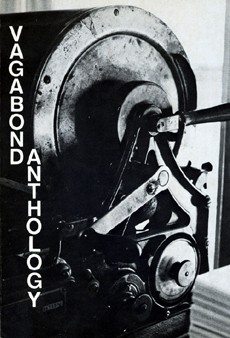
click the Hcolom Press logo to visit the web page...HCOLOM PRESS is the heir to Vagabond Press, which began as a main player in the Mimeo Revolution of the Sixties and continued publishing right into the jaws of the new millennium. HCOLOM PRESS embodies the spirit of Vagabond Press, retooled for the times we live in.

Hcolom is Moloch spelled backwards. Moloch is an Old Testament deity to which children were sacrificed, a practice society still engages in with increased enthusiasm. Consumerism is the new Moloch, manifesting itself like cancer in war, politics, the arts and religion, in every nook and cranny of human endeavor, draining the intrinsic beauty out of life and mutilating the innocence and magic of childhood with its commercial meat hook. HCOLOM PRESS intends to publish books that by their nature repudiate this pernicious force–novels, poetry, children’s books and books that transcend genre.

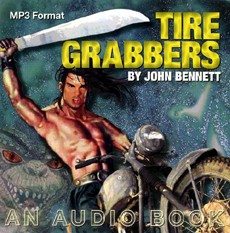
Our launch book, in June of 2006, was John Bennett’s novel, Tire Grabbers, a fable of sorts, a reality book rooted in the fantasy of our times, the story of the coming of Moloch and the children who rise up in rebellion against it.

Books of kindred spirit will follow close on its heels. Go for it by clicking here… or hit the Hcolom logo above… or just hit any of the following covers…

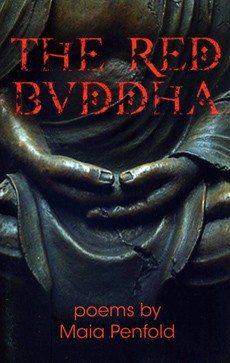
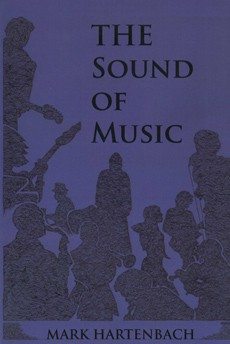
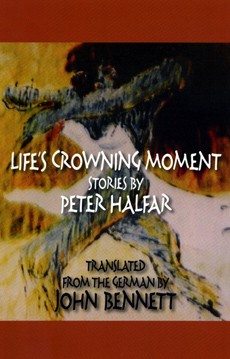
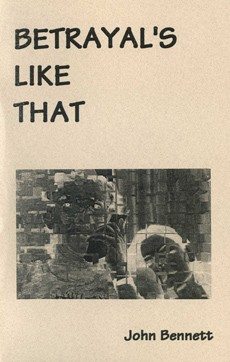
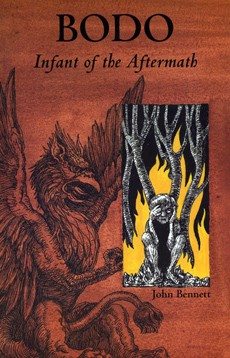
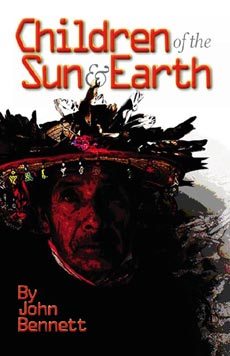
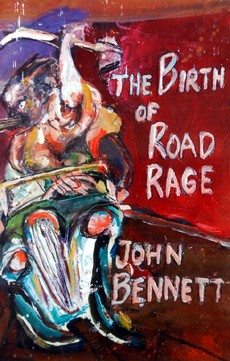
Six Poets | Hcolom Press | click the cover if you are interested in buying this book... click the cover if you are interested in buying The Birth of Road Rage... click the cover if you are interested in buying The Theory of Creation by John Bennett... click the cover if you are interested in buying The Red Buddha by Maia Penfold... click the cover if you are interested in buying The Sound of Music... click the cover if you are interested in buying Betrayal's Like That by John Bennett... click the cover if you are interested in buying The New World Order by John Bennett... click the cover if you are interested in buying BODO by John Bennett...

1 Comment

Filed under shards

these street were ours

These Street Were Ours


Here comes Mr. K down the late-April afternoon sidewalk, gray ponytail, a stubble of beard, leaning on a cane, his face locked in concentration that slides into an easy smile when he see me.

“Here we are,” I say, “hobbling around on canes,” and Mr. K waves his cain in the air: “I consider it a concealed weapon,” he says.

Later on I pass Frederico making a U-turn in his painting truck, a beret on his head, sporting a goatee and bifocals. Frederico played bass for the Hombres back in the day, and one afternoon he walked into our resident bar, The Corner Stone, while the owners, Larry and Dave, were giving this new DJ thing a trial run. Frederico’s eyes narrowed and he turned over the turntable and sent vinyl flying every which way, then picked this spiffy little DJ dude up off his stool and threw him out into the street. He sat down at the bar, ordered a beer, and got it.

The Corner Stone was so much like home that I brought half my living-room furniture down there one afternoon, including a black-and-white TV, and set it up in a far corner.

Once Lynx, a gay ex-marine, and Frieda, her face like leather (at one time she ran with Bonnie and Clyde’s get-away driver) rode their horses into the Corner Stone and got served without having to dismount.

Another time, while working the night shift, Bruno, having trouble getting it across to the non-regular customers that it was closing time, took a pistol from under the bar and shot out all the neons on the far wall. That did the trick, and when they were gone Bruno locked up and the regulars sat in the dark drinking beer and smoking pot.

One winter night Cowboy Bob and I rolled a snowball out front of the Corner Stone so big it took the help of two passing cowboys to get it into the trunk of my Chevy. We drove out to the Ranch Tavern on the outskirts of town, and when they refused to let us bring the snowball inside, we sat in the parking lot and with the help of some others, turned it into smaller snowballs, smuggled them inside with the help of Cody and Cordell and Tall Ed, and started a snowball fight that brought the band to a standstill and got us all 86ed.

Half the people from that crowd are dead now, mostly by misadventure. I was their chronicler, cranking out their adventures on a 1917 A.B. Dick mimeo.

There’s something that we never talked about that we refused to turn loose. Some sort of code was involved, but we never talked about that either.

Leave a Comment

Filed under shards

the secret yellow pad society

The Secret Yellow Pad Society


He was almost out of money. He had to find a cheaper source for writing material, and so he Googled Yellow Pads.

There were a good number of special offers if he bought in bulk, and there was a cryptic “If it’s the very soul of you, call this number.” No email, no street address, just an 800 number. When he checked it out, it was Helsinki.

He wondered if he’d have to speak Finish, but a woman answered the phone and said in perfect English: “Is it the very soul of you?” and he said without hesitation — yes.


***

He got off the plane with one suitcase. “What are these?” asked the customs clerk when he opened the suitcase.

“Yellow pads,” he answered.

The customs clerk picked one up, its pages covered in scrawl, then dropped it back into the suitcase. “What is the purpose of your visit?” he said.

•••


Outside the terminal, standing next to a black limo, stood a dwarf holding a yellow pad to his chest. He walked up to the dwarf, and without speaking the dwarf opened the back door to the limo. He got in and sat holding his suitcase on his lap. The limo eased into traffic.


***

He’s been at it for three years now. Sometimes he misses his old life, but all-in-all he’s grown accustomed to what he does. He travels the world on assignment, and he travels light–a shaving kit, a change of clothes, a special credit card that allows him to access funds anywhere he goes, and a single pristine yellow pad.

He interviews prospective candidates, and if he finds that pouring their hearts out on yellow pads is the very soul of them, he brings them to Helsinki where they’re briefed and sent off to the colony, far out on the tundra.

Leave a Comment

Filed under shards

the moth eaters

John Bennett

John Bennett

The Moth Eaters

Savarno and Cantrell called out to me from the other side of the street, and I cut out into the traffic and worked my way over there. They had this girl with them, rather plain, and Cantrell engaged me in a little waltz accompanied by his gravel baritone, around and around the cracked sidewalk out in front of the Rock Shop where old Clarence sat gloomily looking out over his precious stones into the hot morning. I disengaged myself from Cantrell and took up dancing with the girl, moving in long sweeping strides down the sidewalk past the Meat Market and the Old West Art Gallery, handling her gentle because she seemed so frail. Cantrell and Savarno moved along with us. The dancing stopped naturally, and all four of us frolicked back across the morning’s business and tourist traffic to Gertrude’s Cafe and Cocktail Lounge.

It was pushing noon, and Gertrude’s was packed. We went up the winding fireman’s stairwell to the lounge and it was packed up there too, mostly local businessmen and some officials from the courthouse. We got a table back from the sunlight and placed our orders–bloody marys for Savarno and Cantrell, a screwdriver for me, and for the girl, whose name was Diamond, a glass of ice water. I had the shakes, I was trying to come down from a three-dayer, but I could tell by the kind of energy Cantrell and Savarno were putting out that I wasn’t going to be able to do it, and so I also ordered a roast beef sandwich to help fortify my stomach.

The sandwich never came, which could have been an oversight, but then it could have been due to Cantrell singing at the top of his lungs and clubbing the table with the cast on his right arm. It’s too bad about Cantrell’s arm, he’s lead guitar in one of the hottest three-man rock bands around, but he’s lucky it wasn’t his chord hand he smashed when he put it thru the wall. Just one little broken bone, that’s all, but it got set wrong, and the doctor told him that what he’d have to do is bust it again, cut into the hand and hack out some bone, slip in a pin made out of rust-free something or other.

“I’d rather have a crooked bone than a pin,” Cantrell said, and out the door he went. So Cantrell was in high spirits, clubbing the table with his cast which was covered with witticisms and signatures, and after two drinks I gave up on the sandwich.

I kept noticing the girl. She didn’t fit in, but she didn’t know how to get out of the situation. I wondered where she’d come from. Her personality seemed like it had been run thru too many wringers, bleached out from too many washboard scrubbings. It seemed as though someone had cut her open and sewed her up again, leaving out a few vital parts. Not the heart or lungs or anything like that–other things, nameless but vital.

We left without paying and went over to the Corral.

At the Corral Cantrell came back into the cocktail lounge from the dining area smiling dreamily and carrying a chocolate-cream pie. Not just a slice, the whole thing, still in its tin. He walked up to Savarno and put an arm around his shoulder and let Savarno have it right in the face. “Happy birthday, motherfucker,” he said.

Savarno sat there with pie all over him. There was pie on the bar and pie on the floor and pie all over Diamond who was sitting next to Savarno. Little globs of chocolate and cream were flecked on the clean glasses on the rack behind the bar, and the barmaid was laughing and wiping at the glasses with a bar towel that smeared the pie around. I was laughing and the only other customer at the end of the bar was laughing and we were all laughing too loud. Savarno was laughing now too, a slow, reflective laugh, shaking his head from side to side, and Cantrell was still standing there with his arm around Savarno’s shoulder. Savarno didn’t make much of an effort to clean himself up, he did it mostly by running his index finger around the sockets of his eyes and down the crevices of his nose, removing the pie and eating it. Cantrell joined in, removing pie from Savarno with his finger and eating it, and he began singing in his gravely voice.

“You guys!” the barmaid kept repeating. She was uptight. Then Jackson the owner came into the bar. He wasn’t laughing. He said something into the barmaid’s ear and I finished my drink and said let’s go.

“Go?” said Cantrell.

“Yeah, let’s go down to the Stymied Eye,” I said.

“Na,” said Cantrell. “Let’s have another drink here first.”

“We’ve been cut off,” I told him.

“What?”

“They won’t serve us.”

“Is that right?” Cantrell asked the barmaid.

She stopped laughing and nodded her head.

The Eye doesn’t serve hard liquor like Gertrude’s and the Corral, it’s a beer and wine bar, and none of the local businessmen or officials from the courthouse go in there for lunch or for any other reason. It’s a poorly-lit place with the smell of hard living about it. It’s the sort of place that on a summer’s day children come coasting up on their fenderless bikes, pull to a stop along the wall outside, and without getting off the bikes, cup their hands to the tinted glass and look inside, the way they might peer into a muddy pond at minnows.

The Eye is run by two bear-like brothers, Harry and Danny, and it’s the kind of place where if you drink yourself senseless trying to figure things out, they’ll deposit you on a couch in the basement to sleep it off and give you coffee or another drink when you make your way back up out of that dank, convenient limbo. Harry was still setting up the till when we came in. He scanned us critically and sighed.

“I don’t want any trouble,” he said, and then started sliding beers down the counter at us. At first everyone began snapping open bits and pieces of yesterday’s paper that were lying scattered on the bar, frowning down into the obituaries, the sports section, the huge generalities of the headlines, and it looked like things might settle down. But then Wild Bill came in, and no one had laid eyes on Wild Bill for quite some time. He sat down at the end of the bar, ordered up a beer, took a long hit off it and then set the can down on the bar. “How they hangin’ Cantrell?” he said. Cantrell was about five empty bar stools away.

“Okay,” Cantrell said. “How about you, Wild Bill?”

“Just finished doing time in an Idaho prison,” Wild Bill said.

“Is that a fact?” Cantrell said. “Harry! Give this man a beer!”

Harry opened another beer and slid it down to Wild Bill. “Here’s another beer from that cheap bastard down the bar,” Harry said. “And here’s something to really wet your whistle.”

Harry scooped a quart chalice full of ice and began pouring Liebfraumilch over the ice. He was emptying two bottles into the chalice at once, and when there was no more room he kept right on pouring, the wine spilling all over the bar. Suddenly there was alarm in the air, like with the pie incident at the Corral.

“Celebration time!” Harry sang out, and he handed Wild Bill a straw. Harry had a straw too, and they stuck their straws into the Liebfraumilch and began sucking it up.

Then we were all doing it, sucking up chalices of Liebfraumilch with straws, all but Diamond who stayed with her ice water.

Cantrell got to his feet after he and Savarno had polished off their chalice, let out a roar, and scooped Wild Bill up in a bear hug. They went over on the floor, wrestled around, and then they got to their feet and held each other at arm’s length.

“You sonofabitch!” Cantrell said. “I thought they’d salted you away for a good long time!”

“Well they did,” Wild Bill said. “I’m an escaped convict.”

Wild Bill went thru another chalice with Cantrell, and it hit him like a sack of stones. You could see it in his eyes. His clear just-out-of-prison eyes went dull and took on a strange focus, and it was as if he’d never left town. Cantrell didn’t look too good himself, and it was only one in the afternoon. Diamond was sitting quiet behind her ice water, and Cantrell got a glass with ice in it from Harry and filled it with wine. “Drink this baby,” he said. “It’ll make you feel good.”

Diamond shook her head no and stared down into her lap where her hands were resting.

Then Savarno came over and leaned down close to her, taking her hand in his and talking poetry to her in a confidential tone. I could see her face from where I sat, the brow furrowed, the smile turned down. It struck me then that she didn’t understand; not just Savarno, she didn’t understand anything.

After awhile Wild Bill went out to his truck and came back in with a lid of grass and a brown paper sack full of firecrackers. We smoked a number out in the alley, all but Diamond who stayed in the bar, and then Wild Bill began tossing firecrackers around. Straight people walking down the sidewalk gave us sour looks.

“Man, where did you guys come up with that chick?” I said.

“Hey, that’s my baby,” said Savarno. “My sweetheart.”

“My honey,” said Cantrell.

“Everyone’s darling,” said Wild Bill.

Back inside, Harry was walking around with enough Q-tips sticking out of him to qualify as a porcupine. He had Q-tips sticking out of his ears, nose, mouth and from the curls of his hair. He had one sticking out of his fly and he was walking around as though nothing was out of the ordinary. The customers who had come in since we arrived were in stitches, and I went behind the bar and got the big box of Q-tips and soon we were all walking around with Q-tips up our noses and sticking out of various other places.

Then firecrackers started going off in the bar, and Harry put away his Q-tips and got serious. “Okay, party’s over,” he said. “Go terrorize someone else’s place of business.”

About then Tall Jimmy came in, a moody boy whose promise was already tarnished at the age of 22. When we went out the door, he tagged along.

Jimmy rode with me and everyone else piled into Wild Bill’s truck–a Japanese number with Idaho plates and wires dangling from behind the dash that Will Bill touched together to start the thing.

On the way over to Cantrell and Savarno’s place, Tall Jimmy and I stopped for a bottle of Jack Daniel’s and a bottle of V.O. I picked up some wrapping paper and a card at a gift store, and we turned the Jack Daniel’s into a birthday present for Savarno.

The house was a wreck. It was so bad that rooms had begun losing definition–dirty dishes and books in the bathroom, a tattered roll of toilet paper unraveled diagonally across what had once been the dining room but now had nothing in it but three orange crates and small mounds of rubbish, paintings hanging lopsided on the walls and busted up in the corners, two rooms up a dark flight of stairs totally empty with curtainless windows.

When Tall Jimmy and I walked in they were all there, drinking from a case of beer. There was a dilapidated old sofa with no cushions out in the middle of the room, and two or three metal folding chairs scattered around. All four of them were crammed together on the sofa, Diamond toward the middle, the faint smile stamped on her face. Not only was it impossible to pick up a trace of Diamond’s personality, it also seemed that her body was hardly there, that it was a tenuous thing held together by loose and hurried stitching that at any moment (if she were to make a sudden move or if someone were to twirl her around too fast) would rupture and send fine sand pouring out in a little hill on the floor.

I handed Savarno his present. Tall Jimmy had already opened the V.O. and nearly half of it was gone.

By the time we’d done in the Jack Daniels and V.O., inhibitions had vanished. Savarno came out with a can of shaving cream in an attempt at retaliation against Cantrell for the chocolate cream pie, and in the process he sprayed everyone else in the room, even Diamond who in slow motion curled up in the corner of the sofa, her blouse pulling out of her jeans and revealing the milk-white skin of her frail back, her spine a parabola of knots leading down into a dark-purple bruise that had not yet begun to yellow.

The shaving-cream attack set off a series of battles, and soon everyone was dripping shaving cream and beer. Every so often someone would get the vague feeling that the situation was getting out of hand and try to slow things down, but then there would be another rush of madness, and we would all be swept along.

I watched Tall Jimmy go out thru the front door and walk right off the porch to a ten-foot drop. He pitched out and sideways, and Wild Bill and I went crashing down the steps, laughing but feeling pangs of concern gnawing up thru the wildness. Jimmy was already getting to his feet, a sweeping abrasion on the right side of his face. We got him back inside, closed the door, and turned to see Cantrell and Savarno tugging at Diamond’s jeans. She’ll break, I remember thinking. She’ll rip apart.


***

I should have gone back to my room at the Harrington and crashed, but the way the day had gone, I didn’t feel like I could sleep. Instead I changed clothes and went back to the Corral.

It was the evening crowd, and the place was packed. I squeezed in between two people I didn’t know and ordered my usual screwdriver. It was the way I usually drank, squeezed in between things, steady and methodical, not saying much, not causing trouble, then going back to the Harrington when the bars closed, bringing a six pack along if it looked like I was going to have a hard time sleeping, sitting in the dark by the open window, looking thru the curtains at the street below and the last stragglers at closing time, the roaring torment that issues from them at that hour, all the toads and worms of their lives brought to the surface for exorcising while the squad car circles the block.

I sat in the Corral for two drinks and then little beads of sweat broke out on my forehead and my body went clammy. I got out of there, got a pint of Wild Turkey from the liquor store, and walked to the edge of town where the Barn is located.

I seldom go out to the Barn, it’s just what it sounds like, a barn-like dance hall that caters to cowboys. By the time I got there I’d finished the Wild Turkey and my body was relaxed.

They were charging $2 cover, and there was Savarno at the door, collecting the money, showered and shaved and in a clean change of clothes. To look at him, you’d never guess what he’d been up to all day.

“Hey, man!” I said, uplifted to know he’d pulled himself together.

“Two bucks, Jabony,” he said, and held out his hand.

I could see the day in his hand, a mild trembling. His doorman act was a front, the whole thing was a front, I didn’t have any more idea who he was than I did about Diamond.

“Where’s Diamond?” I said. “Where’s your honey?”

Savarno stared at me with his hand out and said it again: “Two bucks.”

“I’ll just hang around the door,” I said.

He turned away and stared off at the dance floor where a few couples were moving to the music of a county/western band.

When the next couple came up the steps, I moved out under the circular tube of neon and began my old barker’s spiel that I’d used in New Orleans. Savarno spun around on his stool, but I’d already collected the $4. I stamped the backs of their hands and handed the money to Savarno.

“That’s it,” Savarno said. “Either pay your two bucks or split.”

“What the fuck,” I said.

We were deep into a stare-down when the dirt parking lot filled with thunder and dust kicked up by a about twenty bikers with their mamas riding shotgun. They backed their bikes in and cut throttle and the band music was there again, flat and thin.

Two bikers and a woman came up the steps to the door, and I stepped out under the neon that floated like a halo just a foot above my head. It was like stepping off into outer space.

“Good evening, gentlemen,” I said as they hit the landing. “Good evening ladies and gentlemen!” I focused on their faces for the first time and found myself looking straight into Diamond’s eyes.

“Hello, Diamond,” I said.

“Is he one of them?” the big biker said. I looked at him and saw that he was the muscle, and then I looked at the other one and saw that he was the mouthpiece, it was in his eyes and his build and the structure of his face. And then I looked up the way a man about to be burned at the stake might look up, and there were flying things above me, a world of moths blapping off the neon tube. My hand went up without haste and my thumb and index finger pinned the wings of a moth together, bringing its vibrating tiny essence down out of the night. I popped the moth into my mouth and while looking into the eyes of the bigger biker, chewed it thoroughly and swallowed it. The taste was chalky at first, then creamy and bitter. I reached up and brought a second moth down from the neon and it went the way of the first.

“Two bucks a head,” I said, and they reached for their wallets.
click the Hcolom Press logo to visit the web page...HCOLOM PRESS is the heir to Vagabond Press, which began as a main player in the Mimeo Revolution of the Sixties and continued publishing right into the jaws of the new millennium. HCOLOM PRESS embodies the spirit of Vagabond Press, retooled for the times we live in.

Hcolom is Moloch spelled backwards. Moloch is an Old Testament deity to which children were sacrificed, a practice society still engages in with increased enthusiasm. Consumerism is the new Moloch, manifesting itself like cancer in war, politics, the arts and religion, in every nook and cranny of human endeavor, draining the intrinsic beauty out of life and mutilating the innocence and magic of childhood with its commercial meat hook. HCOLOM PRESS intends to publish books that by their nature repudiate this pernicious force–novels, poetry, children’s books and books that transcend genre.

Our launch book, in June of 2006, was John Bennett’s novel, Tire Grabbers, a fable of sorts, a reality book rooted in the fantasy of our times, the story of the coming of Moloch and the children who rise up in rebellion against it.

Books of kindred spirit will follow close on its heels. Go for it by clicking here… or hit the Hcolom logo above… or just hit any of the following covers…

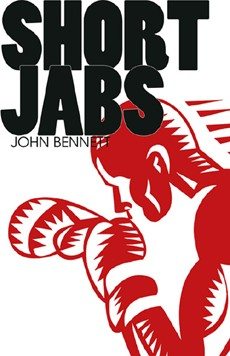
Six Poets | Hcolom Press | click the cover if you are interested in buying this book... click the cover if you are interested in buying The Birth of Road Rage... click the cover if you are interested in buying The Theory of Creation by John Bennett... click the cover if you are interested in buying The Red Buddha by Maia Penfold... click the cover if you are interested in buying The Sound of Music... click the cover if you are interested in buying Betrayal's Like That by John Bennett... click the cover if you are interested in buying The New World Order by John Bennett... click the cover if you are interested in buying BODO by John Bennett...

Leave a Comment

Filed under shards

the new world order

John Bennett

John Bennett

The New World Order

James was home on a visit. He wanted to know why it was if there was a new world order that everything inside him was imploding and exploding and flaring up into a fireball. He wanted to know why he was filled with dread. He tried posing these questions to his father, but his father kept right on polishing the stock of his gun without saying a word. Instead he abruptly held the gun out to James. It hung in the air, glowing in the workshop’s neon light.

It was a rifle, not a gun. This is my rifle, this is my gun, one is for pleasure, one is for fun. Is that how it went? It was like a haze settling down over his mind. But if the words were wrong, the image was still strong, standing at the foot of his bunk at Paris Island in his white boxer shorts and combat boots with his rifle in one hand and his genitals hefted in the other. Fifty men face-to-face at the foot of their bunks, warriors of the old order.

His cock, that was his gun, his fun, and his rifle, that was his pleasure. The pleasure of squeezing off a round and watching it blow a hole as big around as a baseball through the cardboard heart of the dummy that had sprung up from behind a rock on the firing range. The boys from Kentucky in his platoon could blast those dummies away firing from the hip, but James, he always had to bring his rifle to his shoulder and take aim, and even then he often missed. No pleasure in that, he found out in the Agent Orange boonies. The dummies out there shot back, from the hip, as if they were from Kentucky, and they hardly ever missed. James was living proof of that, the ugly scar across his chest, the howling absence of his right arm.

The pleasure of killing, that was it. The word was killing, not pleasure. This is my rifle, this is my gun, one is for killing, the other’s for fun. Now he was onto something. If he could hold his concentration for a tad bit longer than a TV commercial, maybe he could get on a roll and piece it all together, get to the bottom of things.

“Take it,” his father said, holding out the rifle. “It’s a piece of work.”


***

It wasn’t 1969 anymore, it was 2009, and James was 59 years old. His father was in his 80s and a devotee of the new world order, just as he’d been a devotee of the old. An order’s an order, his father told him when James was a child. An order’s an order and meant to be obeyed. That’s the nature of things, his father had said, explaining to James why his older brother had been napalmed to a crisp on the beach at Anzio.

Anzio? Where was that? All these exotic places blipping through the American collective consciousness and fading away again. Whose older brother? His or his father’s? Someone had died in the Spanish-American War, that much was documented fact.

Just a month earlier a young gas station attendant who was studying computer science nights at the community college had yelled at James in his favorite bar back in Idaho that he was an old fool who didn’t understand anything, that Spain and America had joined forces against Communism way back then, and that’s what the Spanish-American War had been all about, that’s where the Communist thing started. And it only seemed that the Evil Empire had toppled overnight, but it was Vietnam where the tide started to turn and Panama was the coup de grace and now there was a new threat, now it was Muslims. James just stared at him and then he smashed him up alongside the head with his prosthetic arm and spent a night in jail for assault.

Sometimes when James was high on something, back before he kicked the booze and the pot and the drugstore highs, sometimes he would look at his son and think his son was his younger brother who had been wounded and decorated, and then he would think of his older brother who turned into his father’s older brother, and the dread set in.

He had this recurring dream of a flag-draped coffin filled with the remains of an unknown soldier, and etched into the rim of the coffin lid were the words Made in China. It was back before the days of body bags in the dream, before the new world order that just like that was there one morning when the world woke up.

His father had both arms and both legs and pretty good muscle tone for a man his age. Somehow he’d slipped between the wars, a fact that filled him with bitterness, because he was a crack shot, as good as those boys from Kentucky. He had the right stuff and stood ready to fight for his country even now. He belonged to a fitness spa and had a second wife no older than James. He was a temperate man who drank one cup of coffee in the morning and at night had a single bottle of beer with his meal while watching Fox news. He was clear-headed, not like James, and he remembered everything chronologically. He knew what he believed in and he was willing to die for it. If you got him going he’d let you know that Roosevelt was the start of the problem, he brought in Socialism and drained the country’s resources with welfare. He didn’t want to hear about Watergate and the Iran-Contra thing and all the business about there not being weapons of mass destruction in Iraq when the point was that America was being threatened by terrorists and there were brave, dedicated men both on the battle field and in office who were trying to save the country, and if their methods seemed a little rough, well just look around. What choice do they have? And when James dug into the raw wound of his mind and tossed out some facts about all the lying and corruption, his father just smiled and held his pleasure to the light, sighting down the scoured and ready barrel.

Earlier James had sat on the back porch steps and smoked a hand-rolled cigarette. He could roll and light a cigarette with one hand. He blew the smoke out in a pale jet and imagined it going straight through the gap in the ozone, as if the ozone was a smoke ring and he was blowing a jet of smoke through it like he’d seen Rufus do at the V.A. years earlier where he’d stayed for longer than he liked to remember.

“The human mind and body are amazing things, phenomenally adaptable,” this shrink at the V.A. had told him during one of his weekly sessions. “You’ll find you’ll soon be able to do many things that unimpaired persons can do, and some things you’ll do even better.”

And right there his mind opened up like a gaping hole in the earth and James went toppling down into that howling, grinding gash and didn’t hear another word the shrink said. When the shrink was done talking he knew he had to give the impression he’d been tracking, following every word, because that was the only way he was ever going to get out of there. And so he said, “I know what you mean.”

The shrink stared at him, and James knew he’d made a mistake, but he had no idea what it was, so he went back to the last thing he remembered hearing, about impaired people being able to do stuff unimpaired people couldn’t do, and he said, “Like Rufus, right? I mean, Rufus is blind, but he can blow a smoke ring and then drill a smaller smoke ring right through the middle of it. How many unimpaired people can do that? Except the thing is, Rufus can’t see what he’s done. He needs someone there to tell him. Like, ‘Hey, man! You did it! You drilled that sucker dead center!’ So–how much fun can that be?”


***

For a long time the music and the drugs carried him, and more than he cared to admit, his wife and his son. But there was something he was barricading himself against, something he sensed but could not bear to confront, something spongy and cloud-like that swirled around him and went in through his eyes and ears and up through his nose like vapor. Something that was dissolving something else inside him that he had no words for, but once it was finally gone, he knew there would be nothing left of him, just a blackness with the faintest hum in it.

It began to happen in the late Eighties, almost twenty years after Nam, the timbers and mud he’d used to shore up his defenses became riddled with stress fractures, there was creaking and moaning, as if his fortification was sinking slowly down into a deep water and the pressure was slowly crushing it.

His temper began to flare, and his wife left him and got a restraining order and then went so fucking far away he had no idea where, she feared for her life, for her son’s life, or so she said. And so he was left in the outback in Idaho in his earth house that he’d built into a hillside, doing things with his one arm and his mounting dread that many an unimpaired person would not have been able to do. He’d dug in, literally, he used to joke about it in the bar before his wife and son left, and then he ceased joking about anything and got into loud altercations with the crazy mix of misfits who were regulars at the bar, other vets and survivalists and an Aryan Nation type or two, they all seemed to share the same dread.

Then the music died, all his Hendrix and Stones tapes and LPs from the Sixties, and no matter how much he drank, all he could do was pass out, there was no release.

And then the Nineties arrived, chronological as clockwork, and someone waved a magic wand and the past got erased. What he had been trying to figure out, process, piece together, suddenly it was as if it had never happened, and all his touchstones were gone. The war shifted to the home front, prison populations soared and little black vans with tinted windows and DARE splashed on their sides in dark red letters began zipping in and out of uptown school yards and men in uniform gave lectures to grade-school children, handed out pamphlets, sold them DARE t-shirt. Restaurants began segregating smokers into rooms without windows and then banning smoking all the way, and people of all ages began working out in health spas. But at the same time the nation went from being the world’s greatest creditor nation to the world’s greatest debtor nation, and while some higher ups looked grim, others got on national television and said relax, it was temporary, there was a bigger picture, there was a new world order coming.

And as if to prove it, the entire Eastern Block that was the rationale for the industrial/military complex collapsed without a single shot being fired, and just as quickly there were half a million troops camped in a desert somewhere fighting a computer war, and James froze up and could no longer process any of it. Nam went up his nose like dream vapor, circulated through his brain and came back out his mouth in tirades. And then the Muslims blew up the World Trade Center and the country went to war with terrorists in Iraq and Afghanistan and anywhere else they happened to pop up.

And so what was he–estranged? There were tens of thousands living under bridges and on heat vents and in cardboard cities and banks were dipping into trillions of dollars of tax–payer money and the Global Economy was on the verge of collapse. Important men who were experts on the matter got on TV and said that what was going on went way beyond the scope of the average man’s comprehension, but that America was going in strong and coming out victorious, that much you could count on.

It all gelled together inside James’ head into something slushy shot through with an electrical charge, and he began smoking forty cigarettes a day and carrying a thermos of black coffee with him wherever he went, even on the flight from Pocatello to his father’s house in San Diego.


***

When his father said take it, he took it, and he stood there with the rifle clutched in his only hand. His father stared at him, but his eyes said nothing, and then he took the rifle back and placed it in the gun rack with the other rifles, ran the bolt through the trigger housing of all those weapons and locked it with a padlock.

“Janey should have lunch ready about now,” his father said, and left the workshop, switching off the neons on his way out, leaving James standing there with his heels together in the room gone dim now with low-grade sunlight filtering through the dirty window at the far end of the shop.

When he went inside, Janey and his father were already at the table, eating ham sandwiches on French bread with lettuce and tomatoes and a pickle on the side. His father was drinking a beer, which was unusual for him in the middle of the day, and Janey had a cup of Lipton’s tea with the bag squeezed out on the saucer. Janey smiled at him briefly and then looked back down to her food. James sat across from his father where his place had been set.

“I didn’t know what you wanted to drink,” his father said, “so help yourself to whatever.” And then he snapped open the morning paper that he hadn’t got around to yet.

James looked down at his sandwich and then up at the paper that formed a thin barrier between him and his father. The headline read: Obama sends more troops to Afghanistan.

James looked at his sandwich, but he did not pick it up. He looked up at the newspaper and waited for his father to show his face.

He would wait for as long as it took.


click the Hcolom Press logo to visit the web page...HCOLOM PRESS is the heir to Vagabond Press, which began as a main player in the Mimeo Revolution of the Sixties and continued publishing right into the jaws of the new millennium. HCOLOM PRESS embodies the spirit of Vagabond Press, retooled for the times we live in.

Hcolom is Moloch spelled backwards. Moloch is an Old Testament deity to which children were sacrificed, a practice society still engages in with increased enthusiasm. Consumerism is the new Moloch, manifesting itself like cancer in war, politics, the arts and religion, in every nook and cranny of human endeavor, draining the intrinsic beauty out of life and mutilating the innocence and magic of childhood with its commercial meat hook. HCOLOM PRESS intends to publish books that by their nature repudiate this pernicious force–novels, poetry, children’s books and books that transcend genre.

Our launch book, in June of 2006, was John Bennett’s novel, Tire Grabbers, a fable of sorts, a reality book rooted in the fantasy of our times, the story of the coming of Moloch and the children who rise up in rebellion against it.

Books of kindred spirit will follow close on its heels. Go for it by clicking here… or hit the Hcolom logo above… or just hit any of the following covers…

Six Poets | Hcolom Press | click the cover if you are interested in buying this book... click the cover if you are interested in buying The Birth of Road Rage... click the cover if you are interested in buying The Theory of Creation by John Bennett... click the cover if you are interested in buying The Red Buddha by Maia Penfold... click the cover if you are interested in buying The Sound of Music... click the cover if you are interested in buying Betrayal's Like That by John Bennett... click the cover if you are interested in buying The New World Order by John Bennett... click the cover if you are interested in buying BODO by John Bennett...

Leave a Comment

Filed under shards

the seventh day

The Seventh Day

There’s negative energy and positive energy, a swirl of neutrons, electrons and protons spinning around a flat earth that is the center of not just the solar system but the entire universe.

God lives dead-center under the flat earth from where he holds it up on his shoulders and barks out commandments.

It’s the way things have been since the Seventh Day. 


***


God gave Man the ability to reason, and reason breeds heretics – that’s how God identifies the Chosen, by their refusal to use reason. 
Throughout time (God’s most abstract creation), the Chosen have had carte blanche to round up men of reason and march them right off the edge of the earth where they get a glimpse of God as they go zooming by. It’s what hell is, this glimpse of God, not some pit of fire.
Men of God speak to the multitudes thru microphones. They’re great organizers and know where the oil is. The fact that most of humanity is starving goes to prove what God is.

There’s a day not too far off when God will suck the Chosen down under the earth with him, leaving the rest of us behind, walking around in wheat fields under the sun.

Leave a Comment

Filed under shards