Category Archives: hcolom press

John Bennett | The Book of Shards

click the cover if you are interested in buying this book...

The Book of Shards

The most comprehensive collection of Bennett’s Shards to date. 317 pages. Hcolom Press, 605 E. 5th Ave. Ellensburg, WA 98926

©2013 John Bennett. ISBN: 978-0-9776783-7-S. Cover Design & Book Layout: Chris Yeseta. Author Photo: Ken Slusher. All rights reserved, including the right to reproduce this book or portions thereof in any form without permission from the author, except for brief passages used in reviews. HCOLOM PRESS (formerly Vagabond Press) 605 E. Fifth Avenue Ellensburg, WA 98926

Some of the Shards in this book have seen previous publication in:

Basho’s Road | Bicycle Review | Big Hammer | Black & Blue | Chanticleer – Cheyenne of the Mind (D Press) | Drive By (Lummox Press) | Pull Metal | Green Panda | Haggard & Halo | Lilliput Review | Los Posey | Mas Tequila Review | Mystery Island | Unlikely Stories | Vindicated in the Blood of the Lamb (Bottle of Smoke Press) | Word Riot | Fire in the Hole (Argonne House Press)

The Word Maker by John Bennett

He strolled into the hock shop and wanted to do a trade. He wanted to trade an unopened box of #2 lead pencils for a guitar.

The hock-shop guy looked at him like he was a wacko. He even said it: “What are you, a wacko? We don’t do trades. And we sure as hell don’t buy pencils.”

“They’re new,” he said. “It’s an unopened pack.”

The hock-shop guy just stared at him.

“A typewriter then? Will you trade for a typewriter?”

“Jesus,” said the hock-shop guy. “What did I just say? And what’s a typewriter?”

He went out to his van, an old VW camper, opened the sliding door, and dug the typewriter out from a pile of stuff–a 1917 mimeograph machine, a saddle-stitch stapler, a heavy-duty paper cutter and a dial telephone with wires dangling from it. He took the typewriter, a wide-carriage Remington manual, back inside and hefted it up on the counter top.

“Let me show you,” he said. He cranked a sheet of paper into the carriage and began banging on the keys. Each time he came to the end of a line a little bell went ding! and he took hold of the carriage arm and slid the carriage back to the left.

“That’s the damnedest thing I ever saw,” said the hock-shop guy. “It makes words.”

“Yes,” he said. “But I’m done making words. I want to make music. So how about I trade you this word maker for a guitar? Or a piano. A piano would work.”

“We don’t do trades!” said the hock-shop guy. “And you want to trade that thing for a piano?”

“I’ll throw in the pencils,” he said.

The hock-shop guy laughed in spite of himself. “Listen, you gotta buy a guitar,” he said.

“I don’t have any money.”

“Well, that’s that then,” said the hock-shop guy.

“What will you give me for the typewriter? I can sell you the typewriter and then I can buy a guitar.”

“What am I going to do with a typewriter?” asked the hock-shop guy.

“It’s a Remington. It’s an antique. Someone will buy it. A collector.”

“So go find yourself a collector to sell it to.”

“I don’t have time. I need gas.”

The hock-shop guy wanted him out of his shop. Other customers had stopped browsing and were staring at them. “Okay,” he said. “Fine.” He opened the register, took out three tens, and handed them over. Then he reached under the counter and brought out a battered guitar with a cracked neck and the D string missing. “Now you can buy this here guitar.”

“How much?”

“How much? Thirty dollars!”

“Then I won’t have gas money.”

“Twenty then. Give me back two tens, and then that’s it.”

The hock-shop guy stared at the Remington after the typewriter guy had left. He moved the carriage from side to side, making the bell ding. Then he lifted the typewriter off the counter and put it on a high shelf.

The typewriter guy was definitely loony tunes, maybe even crazier than the wackos who laid down cold cash for assault weapons.

He put his “back at one” sign on the door and walked down to the corner diner for lunch.

FEEDBACK ON JOHN BENNETT’S WRITING

“You’ve fought a harder, cleaner fight than anybody that I know.” — Charles Bukowski

“Kafka, 21st century Kafka. Again and again. Shard readers should coalesce and… I don’t know. The really good ones are so profoundly good.” — D.E. Steward

“It’s some of the best stuff I’ve read in a long, long time, and I’ve been reading forever.” — Al Martinez, L.A. Times

“Bennett is a remarkable writer, ferocious in his intent and startlingly poetic in much of his execution.” — San Francisco Review of Books

“John Bennett never fucks around and has sensitive, frank, disturbing things to say… he fills in the chinks in poetry-culture where the mice and owls live.” — Exquisite Corpse Magazine

“Sometimes you hit it so hard and so right, it’s almost like sex…” — Lynne Savitt, poet Wantaugh, NY

“The two pieces (in Betrayal’s Like That) that really stood out were ‘Three Dog Night’ and ‘Ballad of a Shard Writer.’ Your prose is better than 90% of what’s being written today…” — Stellasue Lee, editor Rattle Magazine

“I thought Tripping In America was one of the best heightened documentaries I’ve read in post-guru America.” — Charles Plymell, poet Cherry Valley Editions

“Bennett’s vital book (Tlie Night of the Great Butcher) is a great redefinition of the short story.” — Small Press Review

“Crime Of The Century is a first-rate piece of writing. I couldn’t stay cool reading this and doubt that anybody could. It doesn’t howl; it’s good reporting, and metaphors out of left field that chill…” — Gene Fowler, poet Berkeley, CA

“The First Gala Affair and The Defrocking of Albert Dream are two of the best stories I have ever read.” — Robert Matte, editor Yellow Brick Road

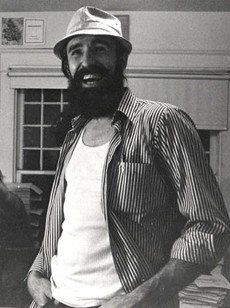
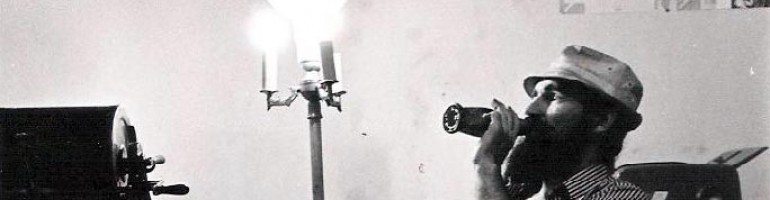
John Bennett | Photo by Ken Slusher

OTHER BOOKS BY JOHN BENNETT

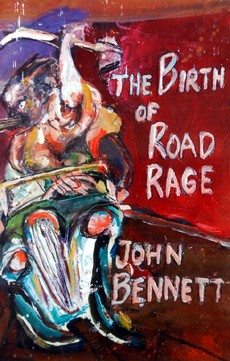
The Adventures of Achilles Jones | Anarchistic Murmurs from a High Mountain Valley | Betrayal’s Like That | Battle Scars | The Birth of Road Rage | Bodo | Born into Water | Cheyenne of the Mind | Children of the Sun and Earth | Cobras &? Butterflies | Crazy Girl on the Bus | Crime of the Century | Domestic Violence | Drive By | Fire in the Hole | Firestorm | Flying to Cambodia | Greatest Hits | Karmic Four-Star Buckaroo | La-La Poems | The Moth Eaters | The Names We Go By | The New World Order | The Night of the Great | Butcher | One Round Robin | Rok och Speglar | The Party to End All Parties | Rodeo Town | Short Jabs | The Stardust Machine | Survival Song | The Theory of Creation | Tire Grabbers | Tripping in America | U-Haul with Dinosaur | Vindicated in the Blood of the Lamb | War All the Time | We Don’t Need Your Stinking Badges | Whiplash on the Couch | The White Papers

click the cover if you are interested in buying this book...


Leave a Comment

Filed under hcolom press

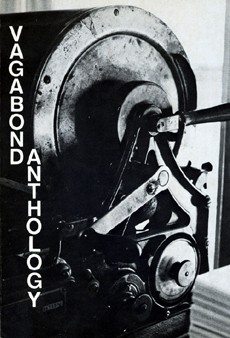
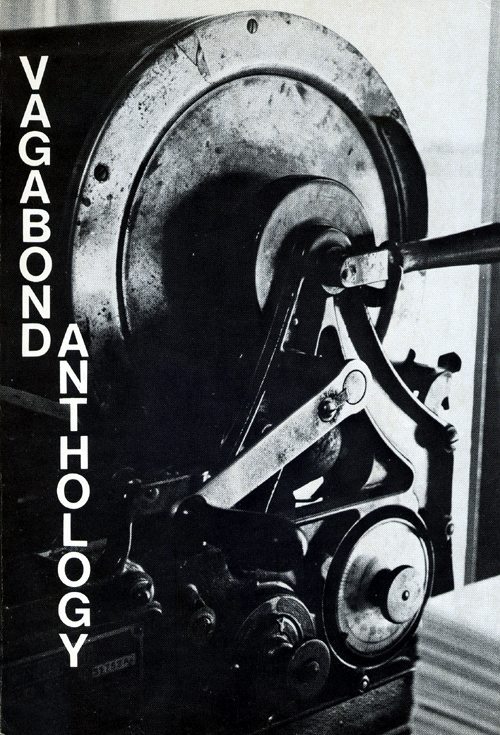
Vagabond Anthology 1966 – 1977

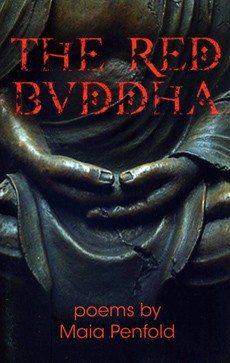
The Vagabond Anthology  |  The best of the first decade of Vagabond magazine, 1966-1977. Including such legends of the small-press underground as Charles Bukowski, Jack Micheline, Doug Blazek, Curt Johnson, Jerry Bumpus, Marcus J. Grapes, Ann Menebroker, Maia Penfold, William Wantling, Kell Robertson, Kent Taylor, T.L. Kryss, d.a. levy, Norm Moser, Lyn Lifshin, Al Masarik, John Bennett, Linda King, etc. | click the cover if you are interested in buying this book...

FOREWORD

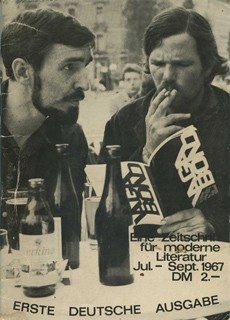
VAGABOND began in the fall of 1964 over a pitcher of beer at a place called Brownley’s in Washington B.C. Brownley’s was located on “M” Street near the George Washington University. It drew a quasi-intellectual crowd from the university and featured cheap draft beer and booths with heavy wooden tables with the initials and slogans of several generations carved into them. It has since been torn down.

Grant Bunch and I were the parties drinking that pitcher of beer, the first of many together over the years, and we were experiencing a hard-to-pin-down dissatisfaction. The dissatisfaction was not new to us, and on this particular day it found a target in The Potomac, then and for all I know still the literary organ of George Washington University. ‘ ‘What a piece of shit,” Grant said that day, thumbing thru the scant 32 pages of pretension and pretty much summing up the magazine. “Why don’t we start our own magazine?”

We spent the rest of that sunny fall afternoon fantasizing over what we could do with our own magazine, and then we ran out of money and the beer stopped coming and we were out on the street again.

The scene jumps a year. It is late fall, 1965. I’m in Munich with my wife and son, studying at the university, and Grant is passing thru, on the road. The idea surfaces again, this time by candlelight under the gables of our single fifth storey room, candlelight because the electricity isn’t hooked up, candlelight and a bottle of good wine and radio Luxembourgh in the background on the portable radio. We talked about the possibility of starting a magazine and the excitement builds until names begin fluttering around the room like fat grey moths. The Lost Muse, The Munich Quarterly, The Underdog, and why not call it Vagabond, my first wife says, and that’s it. A poem I’d written several years earlier. A rather tightly structured piece of poesy, hardly an indication of what we would soon be publishing, but for curiosity’s sake, here it is:

VAGABOND

Cyclopean, wind-heaving sky up above
As we hie up with vigour
through galloping country.

Cresting a hill and caressing the heavens
Swoop down through the village streets
Rough-hewed and cobbled.

As snarling our cycle
Greets indolent structures
(Age-old Germanic, all somber about us)
Then out again, free again
France Spain who knows
Where the Vagabond wanders.

………………………………………………..Tenacious of life.

So Vagabond it was, I quit the university and went to work washing dishes and my wife became a German postal employee. Grant went off around the world on Norwegian freighters and Maria Spaans came down from the Netherlands to design the Vagabond logo and along with Peter Halfar take charge of layout and design. We located The Brothers Westenhuber, a sympathetic printer who did our printing at what must have been cost, and in April of 1966, the first issue appeared. We published a total of five issues in Munich over the next 15 months, and then our financial situation became so bad that we were forced to return to the states. We wound up in New Orleans.

It was in New Orleans that the personality of the magazine began to take shape. It took five or six issues to burn out the preconceptions, that many issues to begin to realize that whether the magazine was quarterly or annual or semi-annual had nothing to do with good literature, you could bring the mag out twice in a month and then once in two years and everything would be fine if the stuff between the covers was good; you could bring it out on gloss paper using a letterpress or on a mimeo using recycled paper and it didn’t make any difference; my God, you could print the magazine with rubber stamps and that wouldn’t matter, that would not make it bad and it would not make it good, the method by which you got the word out was incidental, the important thing was to get it out, the important thing was to go after all those vague dissatisfactions, to get at the core of them, to not fall for the soft persuasions and rationalizations, to not cower in the foothills of the mountain of accumulated historical evidence that tells you you are wrong, to keep your eye on it and keep moving toward it until you hit it, you strike that chord that lies deep inside all of us and you say something that is true and always has been true and always will be true and is not and cannot be compromised and rationalized and frittered away, can only be lost from sight—you say it and do it and it is a poem, no matter what the form.

And so an editorial bias began to take shape. Glenn Miller, who became art editor in New Orleans, found a 1917 A.B. Dick open-drum mimeo in a spring cleaning garbage heap. We tore it down, cleaned and repaired it, and for the next six years, all issues of the magazine and all Vagabond books were printed on that mimeo. Since New Orleans we’ve operated out of San Francisco, Redwood City and now Ellensburg, Washington. Since New Orleans our editorial policies haven’t changed. We don’t cater to fads, panaceas, revolutions or movements. We don’t aim to make you happy just to let you down. We think that poetry is content, not form, form being incidental, the Cadillac in which the diplomat rides. We think poetry is potent, spiritual and mysterious. It is not a play thing. It is as scarce and illusive as it has always been. Its only reward is in its discovery, and you discover it thru clear vision, a flash of insight in the vast black mystery of your very brief existence. This society and this species is optional. Other options do exist and still may be taken. Imagination is far more important than knowledge, Albert Einstein once said. What he did not say is that too much knowledge without enough imagination is a dangerous thing. A terminal thing. This anthology and the books and issues of the magazine that came before it and the books and issues of the magazine that will come after it are small black bombs for the playpen of the future. They are time capsule messages that may or may not do some good some day. Here, let Henry Miller wrap it up for me:

THE TIMES ARE ALWAYS BAD. . .

Anything less than a change of heart is sure catastrophe. Which, if you follow the reasoning, explains why the times are always bad. For, unless there be a change of heart, there can be no act of will. There may be a show of will, with tremendous activity accompanying it (wars, revolutions, etc.), but that will not change the times. Things are apt to grow worse, in fact.

To imagine a way of life that could be patched is to think of the cosmos as a vast plumbing affair. To expect others to do what we are unable to do ourselves is truly to believe in miracles, miracles that no Christ would dream of performing. The whole social-political scheme of existence is crazy — because it is based on vicarious living. A real man has no need of governments, of laws, of moral or ethical codes, to say nothing of battleships, police clubs, high-powered bombers and such things. Of course a real man is hard to find, but that’s the only kind of man worth talking about. It is the great mass of mankind, the mob, the people, who create the permanently bad times. The world is only the mirror of ourselves. If it’s something to make one puke, why then puke, me lads, it’s your own sick mugs you’re looking at!

That’s it. What we have in this anthology was culled from the first 25 issues and the first 11 years of the magazine. We hope you enjoy it. — John Bennett Editor VAGABOND PRESS

John Bennett, editor & publisher of Vagabond Press | Photo by Jill Andrea

John Bennett, editor & publisher of Vagabond Press | Photo by Jill Andrea

THE VAGABOND ANTHOLOGY

© 1978 by john bennett, 605 E. 5th Ave., Ellensburg, WA 98926

All rights reserved including the right to reproduce this book or portions thereof in any form other than short quotes in reviews without prior permission. Rights to the material in this book shall revert to the individual authors upon publication.

Library of Congress Catalog Card Number: 77-90626 | ISBN (cloth): 0-912824-19-0 ISBN (paper): 0-912824-20-4. First printing: April, 1978. The Vagabond logo was designed by Maria Spaans in 1965. Cover photography: George Stillman. Special thanks to Jill Andrea for much of the professional photography in this book.

VAGABOND would like to thank its patrons who were instrumental in making this anthology possible. Patrons as of this writing: Lifetime patrons: Mr. & Mrs. Jack Lucey, John D. McCall, Lois H. Prentice, Jerry Kiefer, and Mr. & Mrs. John Bennett Sr. Current patrons: Harriet Dolphin, anonymous, John Gilgun, anonymous, Paul Swetlik, William Walker, and Four Winds Bookstore.

CONTENTS

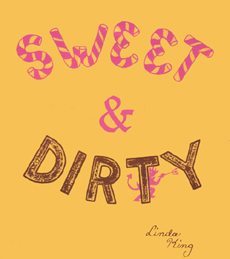
IG. THORSTEINSSON – DOROTHY HUGHES – W. PRICE TURNER – M.CHARLES REBERT – GRANT J. BUNCH – ROBERT BLOOM – TERRY ARTHUR – RICHARD L. BENNETT – VIVIAN YUDKIN – CHARLES BUKOWSKI – JACK MICHELINE – STEVE RICHMOND – KIRK ROBERTSON – MARCUS J. GRAPES – ANN MENEBROKER – CURT JOHNSON – WILLIAM WANTLING – WILLIE – KELL ROBERTSON – NILA NORTHSUN – HUGH FOX – CHARLES NACCARATO – JERRY BUMPUS – KENT TAYLOR – T.L. KRYSS – LEO SALAZAR – DOUGLAS BLAZEK – D.A. LEVY – PETER NICOLETTA – NORM MOSER – CURT JOHNSON – STEVE KOWIT – IRA HERMAN – TOM SMARIO – LOUIS GARCIA – DAVE REDDALL – GEORGE CHAMBERS – ROBERT MATTE – DAVID L. JAMES – JOHN M.BENNETT – D.E. STEWARD – JIM GUSTAFSON – JERRY SPINELLI – RONALD KOERTGE – JOE ESMONDE – E.L. MACON – STUART DYBEK – PAUL H. COOK – KEN MIKOLOWSKI – JOAN SMITH – WILLIAM POLING – MICHAEL MC MAHON – M.L. HESTER, JR. – ALYCE INGRAM – LYN LIFSHIN – ERIC CHAET – PETER FIORE – JARED PAUL – DAVID AXELROD – MARGARET THOMAS – JAMES MC ENTEER – WAYNE MILLER – PAMELA LESLIE POWELL – CHRIS PETRAKOS – EILEEN JAMES – PATRICK FANNING – JERRY BUMPUS – GERDA PENFOLD – ART BECK – ROBERT SCOTELLARO – JOHN BENNETT – LINDA KING – JAMES OREM – AL MASARIK

John Bennett, editor & publisher of Vagabond Press | Photo by Jill Andrea

John Bennett, editor & publisher of Vagabond Press | Photo by Jill Andrea


Leave a Comment

Filed under hcolom press

Six Poets | John Thomas | Ann Menebroker | Ronald Koertge | Lyn Lifshin | Al Masarik | Gerda Penfold

John Bennett | Six Poets | Vagabound Press 1979 | click the cover if you are interested in buying this book...

A Vagabond Publication, 605 E. 5th Ave., Ellensburg, WA 98926. Library of Congress Catalog Card Number: 78-65142 | ISBN: 0-912824-21-2 (c) 1979 John Bennett. Cover design by Cindy Bennett. Drawings by Charles Bukowski. Second edition.

THE POETS…

JOHN THOMAS…

“There are some writers whose work is difficult to comment upon without overstating their concerns or ideas. John Thomas is one of these writers.” So begins Paul Vangelisti’s introduction to Epopoeia and the Decay of Satire, Red Hill Press’ superb collection of Thomas’ poetry and short prose. Many of Thomas’ poems in Six Poets first appeared in the Red Hill Press collection, and rather than paraphrase Vangelisti or attempt my own summation of Thomas’ work, I’ll let the poems speak for themselves and strongly recommend that the reader purchase a copy of Epopoeia. It is available for $3.50 from Red Hill Press, 6 San Gabriel Dr., Fairfax, California 94930.

ANN MENEBROKER…

I started out writing poetry thinking it was important, and that being a poet was holy…I started out thinking writing groups were necessary, and reciting in public, exciting…! met a lot of people who were poets and not very holy, and people who were not poets and were not holy, either…I no longer need to go places, and reading scares the hell out of me, so I no longer do it. I have long periods of not writing poems. Sometimes I live poems/Sometimes I watch others live them.” BOOKS: It Isn’t Everything, Aldine Society of California; Slices, co-authored w/James Mechem, Grande Ronde Press; Three Drums for the Lady, Second Coming Press; If You Are Creative I Will Vanish, Zetetic Press; The Habit of Wishing, co-authored w/Rosemary Cappello & Joan Smith, Goldermood Press.

RONALD KOERTGE…

“Born April 22, 1940, and lived for eighteen years in South-Central Illinois. Attended the University of Illinois and the University of Arizona. Now teaching at City College in Pasadena.” BOOKS: The Father Poems, Sumac Press; 12 PHOTOGRAPHS OF YELLOWSTONE, Red Hill Press; My Summer Vacation, VCP Press; Meat, Mag Press; Men Under Fire, Duck Down Press; etc.

LYN LIFSHIN

is–to be sure-widely published. Over 20 books, over 10 anthologies, and countless magazine publications. She’s prolific, and when she is good, she is very good.

AL MASARIK’S

Red Mountain, Agatha Christie & Love has been translated into German as Unter der Haut is available from the Maro Verlag, Bismarck Strasse 7 1/2, 8900 Augsburg, Germany. BOOKS IN ENGLISH: Red Mountain, Agatha Christie $ Love, Invitation to a Dying, An End to Pinball, and A Post Card from Europe, all from Vagabond Press; Broken Hips and Rusty Scooters, Lion’s Breath Press; due soon from Black Rabbit Press, Van Gogh’s Flowers.

GERDA PENFOLD

is German born Canadian raised, and presently lives in San Francisco. Her book Done With Mirrors is available from Vagabond Press. She’s worked as art critic, Kelly Girl and captain’s mate. Like the other poets in this book, her talent remains largely and disturbingly unrecognized.

John Bennett | Six Poets | Vagabound Press 1979 | click the cover if you are interested in buying this book...


Leave a Comment

Filed under hcolom press

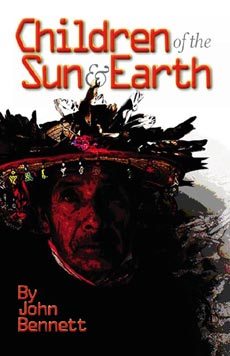
John Bennett | Children of the Sun & Earth

Children of the Sun & Earth - a novel by John Bennett | click the cover if you are interested in buying this book...

In John Bennett’s novel, Children of the Sun & Earth

an intelligent, steady-nerved young man and veteran named Tobias climbs the rungs of power in the cutthroat world of drug dealing and heavily armed Mexican cartels. By applying the right amount of respect and confidence in meetings with the heads of the Morales cartel, the Huichol Indian tribe, all the way to Pablo Escobar, Tobias sets himself up for the ultimate showdown between the DEA, a Vietnam Colonel named Wild Harry Witherspoon, the top drug lord in the world, and a team of highly-skilled Vietnam veterans.

Tobias comes from a long line of smugglers and dealers who stretch back to the early 19th century. Bennett’s abundantly detailed history of drug trade hundreds of years ago is one of the most fascinating parts of the book. A “half-breed Seneca” tells her farmer husband that the other farmers are smuggling wool and whiskey. She notices the demand for opium, and soon, with natural prowess, she begins moving the drug in from Canada and makes a profit. But, with most risky, lucrative endeavors, complications arise, competition moves in, and the operation becomes treacherous.

The novel is not only a story about the history of major drug smuggling in America. It’s about brothers, destiny, and war. It’s about the individual regaining his spirit and fighting the great beast of mediocrity.

Out of a large cast of extremely well-developed characters with intricately interwoven pasts, Bennett’s novel ultimately follows the lives of two brothers, Seneca and Tobias. Early on, because of an altercation at school, when a “single act altered the direction of his life; no, determined the direction of his life”, Seneca is suddenly obligated to join the military, where he excels and becomes a covert operative. Tobias, later on, gains prominence in the world of drug dealing. Because of the high statures of both brothers, their paths begin winding toward each other once again.

Years later, “…there’s a situation developing on the home front that’s jeopardizing the way the intelligence community works with the cartels,” a government agent briefs Seneca. “The entire west coast,” he says. “Escobar took control of cocaine on the west coast in 1980…. But he did it swift and clean, and so we let him have it. Then, in ’82, an organization sprang up out of nowhere and in a matter of months blew Escobar out of the water. Whoever these guys are, they’re good…. There’s Nam stamped all over it.”

How will the DEA quell this shakeup of the drug world without alerting the public to their own collusion in the drug trade? How will the U.S. government disarm renegade Nam vets who have been trained by the very best? There is a constant jockeying for power between forces mostly unseen or unrecognized by the average American, and all of the forces are either tied into, or only capable of existing because of the American war machine, both at home and abroad.

The Children of the Sun & Earth is a brisk read with one memorable scene after another. Its story and its characters will remain with you long after you finish the final page. — Adam Michael Luebke – Dear Dirty America

Children of the Sun & Earth - a novel by John Bennett | click the cover if you are interested in buying this book...


1 Comment

Filed under hcolom press