Category Archives: shards

poetic license

Poetic License

Chin-Chin Acaby wrote a novel called The Second Law of Thermodynamics, but on advice from his literary agent, he changed it to Things Come Unglued, and Chin-Chin hit the Big Time.

He hightailed it out of Kenya and cozied down in Cairo where he wrote a sequel, I’m Out of Here, but it bombed, and Chin-Chin began ghost writing for Third World despots and doing literary criticism. When he began receiving death threats he got a visa and moved to Boston where he landed a job teaching at a private university and married Rosy O’Brien, a South-Boston working girl. They moved to the suburbs.

Early on people threw rocks through their windows, but eventually the neighborhood settled down and Chin-Chin and Rosy raised a family.

Then Trump got into office and Chin-Chin was accused of taking jobs away from Americans and fathering illegal aliens. Chin-Chin, along with Barak Obama, became high-profile examples of how foreigners were taking over the country, but it was a small army of Mexicans that caught the brunt of the outrage.

Leave a Comment

Filed under shards

mood swings

Mood Swings

One minute he’s on top of the world, the next he’s caught up in the gears of some ill-tempered machine.

“It’s only mood swings,” his wife says, and tries to straighten his tie.

“Here, sit down and eat,” she says, taking the lid off a pot of steaming potatoes. When he looks away her lips begin to quiver. “It’s just potatoes!” she says, and rushes from the kitchen.

He goes about his business. He sweeps the leaves from the front porch and brings in the paper. He takes it into the garage and reads the headlines while sitting in the family car with the engine running and the windows up and a hose coming in from the exhausted pipe. He turns on the radio and honks the horn. He takes off his tie that his wife couldn’t straighten and makes a noose out of it. He slips it around his neck and ties the other end to the rearview mirror. He drops to the floorboard and the mirror snaps loose and gashes his forehead. He turns off the engine, gets out of the car, and goes back into the house.

“My God!” his wife cries. She rushes from the kitchen and returns quickly with a first-aid kit and a bottle of rubbing alcohol.

Their son comes thru the front door. He’s been sniffing glue with his friends. He sees his mother pouring alcohol over his father’s head where he sits slumped on a kitchen chair. He laughs hysterically, the son does. The alcohol fumes have super-charged his glue high.

“Go to your room!” his mother commands. “Immediately!”
Once in his room he drops his pants and makes a few new razor cuts on his thighs. Then he peeks thru the keyhole. His mother has swaddled his father’s entire head in bandage, leaving only a small hole for the mouth. She’s ladling in the potatoes, and his father is sitting up straight, his hands on his knees, taking it in.

Leave a Comment

Filed under shards

let’s hear it

Let’s Hear It

Let’s hear it for James Joyce and mad Irishmen, for Kenneth Patchen and the working man’s blues, for e.e. cummings and a park full of pigeons, for J.D. Salinger and Alan Sillitoe and their dead and gone followers, for the great Joe Gould who spoke the language of gulls and drank sunlight, for trapped song birds, for 100 years of solitude, for Octavio Paz, for Edward Abbey and the wild desert, for Neruda in an ocean of dream, for Leonard Cohen and his highbrow flirtations, for all the champions of the reckless and the beautiful whose eyes shine on after death.

Leave a Comment

Filed under shards

stealing childhood

Stealing Childhood

“If we could only get enough good men to walk together, but we won’t.”

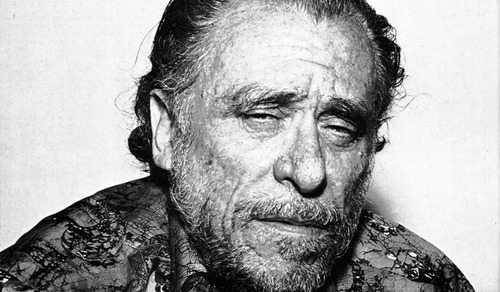
That thought came to Bukowski a long time ago, probably in the early ’40s while he was curled up on a park bench with a Salvation Army overcoat pulled over him, a bench behind a library, maybe in Cleveland, Detroit or Omaha, a library filled with books about a fifth of which Bukowski had probably read, but none of which he’d written.

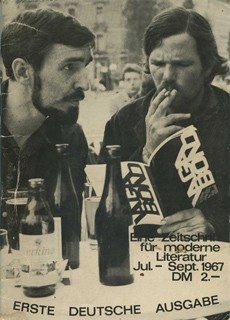
This was before Carl Weissner and the German connection, before John Martin and Black Sparrow Press, before color TV, cell phones and smart phones, before there was a computer in every home and soon after that a computer the size of a giant Hershey bar in every purse, pocket and backpack, long before cars became driverless, but by the time that happened there would be no place left to drive to anyway, no place to escape to, the on-the-road days would be a done deal, we would all be under surveillance and the Corporate Giant would rule everything from entertainment to government.

But back when Bukowski had this thought about good men walking together there were still people on the road, vanishing into thin air, hanging on like bulldogs to something that could not be pinned down with words; these people thought the world they moved thru would never be detected by the Corporate Giant, they did not see that the Corporate Giant didn’t need to detect their world, it simply kept blindly expanding and with an insatiable appetite consumed everything in its path, consumed nature, consumed childhood so that eventually the children born into the corporate world had their human values paved over with corporate values, with games and products, with compulsive consumption, all of which overrode parenthood.

Back then, when Bukowski had his thought, there were a handful of others who understood, who felt it in their gut, who saw the future that we are just now entering, a future beyond global warming in which it would no longer be possible to get enough good men to walk together, because by that time the Corporate Giant would be dictating all our wants and desires and leaving us to believe that those wants and desires originated with us.

Bukowski saw that before we got enough good men to walk together, the Corporate Giant would have stolen childhood, and dreams would go up in smoke.
Leave a Comment

Filed under shards

learning how not to die

Learning How Not to Die

I’m on a rudderless ship with Father Time and Lady Death. There are no other passengers.

Father Time swings his scythe low and says, “Jump!”

I jump over the scythe. It’s like skipping rope.

Lady Death is lounging in a deck chair, her lips scarlet, wearing dark glasses and a red dress, an iced drink in one hand, a cigarette in the other. She smiles as I jump over Father Time’s scythe. She flicks the ash off her cigarette and the tip glows. I find it hard to keep my eyes off her.

Leave a Comment

Filed under shards

once someone loved you

Once Someone Loved You

Sailing down a river of bad memories, and even good memories turn bad if enough time passes.

Jack-the-Ripper recall, slashing away at the veiled tabernacle of days.

It’s not at all like you thought it would be.

It’s an isolation ward with no nurses, no doors, narrow windows up close to the ceiling. It’s a room without furniture, a room of echoes with a highly buffed floor, soundproof from your side going out, but you can hear footsteps and murmurs coming in from the other side, from a world that no longer pays you attention.

Your hopes and dreams have been wrapped in newspaper like dead fish. Your accomplishments are heaped in the corner.

You’re not even sick, you’ve just lived too long.

Once someone loved you, but it no longer matters.

Leave a Comment

Filed under shards