Category Archives: shards

what we all have in common

What We All Have in Common

Making it is not really making it.

Obscurity leads to clarity and then it’s no longer obscurity; it’s not “making it”, either. It becomes suspect.

Of course a lot depends on who we’re talking about, who it is who wants this or that or doesn’t.

People who make it and then slip into obscurity are ridiculed by people who make it and stay there, and they’re also shunned by people who have come by their obscurity honestly.

You may be thinking, “What?”

It’s people like you who make the world go ’round – the proletariat, the working class, college professors and career military personnel, all of them up to their eyebrows in credit-card debt; you drive people who want nothing to do with you into obscurity or send them scrambling up the ladder trying to make it.

Of course there are the poets, who don’t fit in anywhere, but they’re almost all charlatans. At last count there were four of the genuine article on the entire North American continent, none of whom are making it and all of whom are obscure. There are 156 in Africa, but most of them can’t read or write.

Every now and then a prophet pops up and condemns everyone, and then they’re either crucified or stoned.

Crucifying and stoning prophets is the one thing that brings us all together, which goes to show that at the core we’re not that different from each other after all.

1 Comment

Filed under shards

what goes around does not go in a straight line

What Goes Around Does Not Go in a Straight Line

Context under stress. The moan of escapism. The florid fast shuffle. A bright burst of the unspeakable, the abrupt death of certainty. I’m up on the hill and the van won’t start.

I fantasize climbing up on the van’s roof and crying out, “You’ll never take me alive!” as three sheriff’s deputies, a mental-health orderly and a dog catcher close in on me. Then I ponder other options.

If this were a stick shift, a stick shift being a vehicle with a clutch, a clutch being a foot pedal to the left of the brake pedal that can be engaged to shift transmission gears, I’d put the transmission in neutral, jump out and push the van to get it rolling down the hill, jump back in and engage the clutch, put the transmission in second gear, disengage the clutch when the van reaches twenty miles an hour, and presto! The engine would kick over and I’d drive home. I’d feed the turtle and the turtle dove and the shy python in the spare room, cook up a little grub, put on my slippers and sit down to write a letter to a good friend down in Sacramento who recently sent me a letter written with pen and ink. Among other things he says:

“I have given up on computers. I’m returning to writing letters with pen and ink…”

“My girlfriend committed suicide…”

“AT&T turned off my phone…”

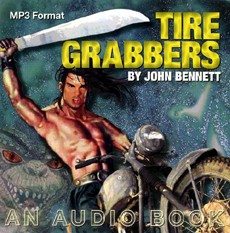
“I found a used copy of Tire Grabbers in a bookstore for $8.50…”

There is a force beyond the Higgs particle the holds imagination together. They will never find it in their digital universe.

But now the moment of truth is at hand. It’s time to turn the key in the ignition and see what direction my life will take.

Leave a Comment

Filed under shards

trouble free

Trouble Free

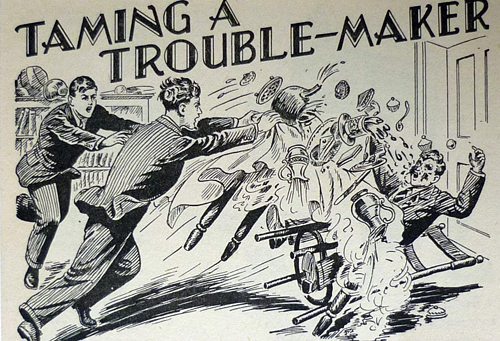
Some people cause more trouble than others. Some people don’t cause any trouble at all. But who are the people on the receiving end of the trouble? And what if the tables are turned? Is it still called trouble?

Trouble is when things don’t go the way you want them to. Take note that this is different from how they should go. How things should go is an avoidance tactic used by people who have more trouble than they know what to do with.

It’s all in how you word it.

For instance, “he’s causing a lot of trouble” means he’s bucking the system and needs to be cut down by legal or fiscal action. Some people cause so much trouble they wind up in prison, or in worse-case scenarios, executed. This is a way of lightening the burden of trouble for people in power.

“He’s more trouble than he’s worth” means he can be disregarded without a second thought. These are the people who most often protest that things are not going the way they should.

“He’s a real trouble maker” is a variation on “he’s causing a lot of trouble”. It means he’s someone you have to keep a close eye on and be ready to transfer to the “he’s causing a lot of trouble” category if he goes too far. These people live dangerously, and the opposite sex is attracted to them, which can cause a lot of trouble.

All people who cause trouble are dominated by the people they cause trouble for; the people they cause trouble for are the ones who decide what words mean. You can rail against them until you’re blue in the face, but this will not change the meaning of words. You’ll only get yourself in trouble. Take note that you did this to yourself.

If you understand what I’m saying, the way out of trouble should be apparent to you.

Leave a Comment

Filed under shards

things i’ve had

Things I’ve Had

Vengeance is mine. So is a six-foot-long claw-foot bathtub and a manual lawnmower. I’m a rich man indeed. I have a tea pot and a frying pan and 67 clothespins. A faded black-and-white photo of me leading George Young thru the first lap in a mile race at the Fort Belvoir Second Army track meet. We were young then, George and me, with young aspirations. George was off to the Olympics and I was on my way to a missile detachment in Holland.

In Holland I had a Czech motorcycle and the love of a Gypsy girl. I don’t know how things turned out for George at the Olympics; I lost interest in the miracle mile when he went tearing past me on the second lap, and I immersed myself in Gypsy love and Dutch beer. I took an overseas discharge and slipped away into Europe.

I had a hard time acquiring things and holding on to them after that. I lost my Gypsy girl and wound up with a German girl but lost her too. I hung on tight to the beer. I drank half the beer in Germany before sailing back to America.

I wound up running a magazine out of a steamer trunk, bouncing from place to place – Munich, D.C., New Orleans, San Francisco. I could slam that trunk shut and be out of town in less than an hour, any town.

I’ve settled down now, except in my head. Things are still pretty wild up there. I live in a cottage with a clothesline out back where I keep the 67 clothespins. The steamer trunk is long gone. Brown University paid hard cash for it when I was at a low financial ebb. Today I’m down to buckets and squeegees, a computer and a shelf of books that I’ve written. And the clothespins.

Right now it’s sunset, Saturday, and I’m parked in my work van on a hill overlooking this valley I wound up in. The hill and the valley are mine, even though some people would beg to differ. There are people buzzing all over the hill as I write, wading through the juniper, taking pictures of themselves with their smart phones and jabbering away like monkeys.

That’s my life in a nutshell, and George Young is nowhere in sight as the gun fires and I turn into the final lap.

Leave a Comment

Filed under shards

the street

The Street

We’re all seeking truth. We’re all seeking answers. We’re all looking for a way out, a way in, an anchor with links as thick as giant sausage to drop and weather the storm. And then reality strikes, the messy unpredictable here-and-now.

People talking war. People talking carnage. People talking the abstraction of distant suffering. You don’t know what six German riot police are until they kick in your door, and then they’re not German, they’re not even riot police, they’re six men with license. From the moment the door splinters off its hinges and your wife starts screaming with her hands over her ears and the two English vagrants you’ve been harboring make a dash for the window, generalities and abstractions and speculations get vaporized and life explodes into a shower of micro-seconds.


***

The Pentagon March, 1967. Face-to-face with a row of bayoneted rifles and gas masks with 19-year-old boys behind them. A girl sticks a rose down a barrel, someone barks a command, and the boys move forward in the short-thrust position. Someone grabs a rifle, someone gives a shove, Norman Mailer has come and gone, Dick Gregory has been rushed to the hospital at the tail end of his protest fast, and then they fire the tear gas.

Things shatter into myriad particulars. You and Grant slide down a hillside and come face to mask with a soldier who is pointing his bayonet at you, and you’re thinking not about the war or justice or equal rights but that this kid doesn’t know Grant. You’ve been here with him before, in New Orleans, on the streets of Brussels, this has nothing to do with McNamara or Mailer, with the Nam, this is personal, and like a swift jungle cat Grant wrenches the rifle out the the boy’s hands, flings it aside, and rips off the mask.

The kid is scared and has no idea what he’s doing. “I’m sorry,” he says, choking on the gas, and–eyes stinging and throats burning–Grant and I laugh. Grant gives the kid a bear hug and we haul ass out of there.


***

I’m parked in my work van up on the hill at 6 a.m., the only vehicle up here, the window rolled down to let in the fresh morning air,drinking coffee and smoking and writing this, when a low rider pulls up alongside me.

A low rider? In Ellensburg? On the hill at 6 a.m?

The tinted window goes down and a black chick says, “You got a cigarette?”

There’s an Arab-looking guy with a gold chain around his neck behind the wheel, and a blond in the back with plucked eyebrows. The four of us are taking readings like crazy.

“I roll my own,” I say.

“Huh,” says the black chick.

The window goes up and the low rider backs slowly in behind me.

I keep writing. I write what just happened and then I study the low rider in the rear-view mirror. I get out of the van and walk back there. The passenger-side window comes down about halfway and I walk around and hold out a cigarette. This isn’t in the script, and that gives me the upper hand.

“I don’t smoke rollies,” says the black chick, but when I continue to hold it out, she takes it, reluctantly. “Do you smoke rollies?” she says to the girl in the back.

“I’ll smoke it,” the girl says, and the black chick hands it back. The girl twists one end of the cigarette like it’s a joint and I hand in a lighter.

The Arab-looking guy has both hands on the wheel and is looking straight out the windshield.

The girl in back lights up, leans forward, and hands the lighter back out. “Thanks,” she says.

“No problem,” I say, and walk back to the van.

I’ve got all the information I need to rest easy.


***

Years ago, in San Francisco, me and my friend Glenn, whose whole life is an abstraction, were driving down a deserted street off Broadway around midnight after a night of drinking, when a woman sprang out from behind a hedge and came running toward the car, waving her hands frantically.

Glenn stopped, put the car in park, and with the motor still running, got out. I took one look at the woman, the way she was dressed, the way her eyes didn’t match her arm waving, and my eyes began darting around. Sure enough, here’s this guy coming around the other end of the hedge, one arm stiff at his side, a pistol in his hand.

“Get in!” I shout at Glenn. “Get the fuck out of here!”

“She needs help!” Glenn says. He still hasn’t seen the man with the pistol.

“Fuck she does!” I say. “There’s a guy with a gun!”

Glenn freezes in place, his eyes glazed–he was rolled in the Fillmore just a week earlier. I reach out, yank him back behind the wheel, put the car in gear, get my foot on the gas and floor it. We go careening down the street, Glenn steering reflexively.

I twist around and look out the rear window. The man and woman are standing side-by-side in the middle of the street, the woman with her hands on her hips, the man with his arm still stiff at his side, holding the pistol.


***

If you’ve spent any time on the street, all this makes sense to you.

The street is where things get processed at lightning speed.

The street is a state of mind.

People who don’t know the street are fair game, and they get what they deserve.
Leave a Comment

Filed under shards

the nfc

The NFC

The N word is a No-No. No, Know’s not the N word. Know starts with a K and that’s OK. But stay on your toes–two more Ks make it KKK, and out come the sheets, burning crosses and lynchings. But Ks in moderation are acceptable to the NFC.

The NFC is an acronym for a literary ethics committee. I’d be more specific, but it’s forbidden to speak or spell the words NFC stands for.

The NFC is not unreasonable. They make ample suggestions for substitutes for offensive words. African American and person of color are healthy substitutes for the N word. For the F word one can substitute Fudge or, in an extremely agitated state, Friggin; although you’re walking on thin ice if you begin using Friggin chronically. And there are ample substitutes for the C word: woman, lady, young lady, girl, person of the female gender, etc. The NFC is funded by the NEA (National Endowment for the Arts) and a host of tax-exempt corporations.

There is much work to be done to purge the American vocabulary of offensive words. The N,F and C words are just the tip of the iceberg. A sub-committee has been established, and its task is daunting: to comb through all the books written in America since the Declaration of Independence and identify offensive words.

There’s nothing that can be done about editions of books already in print, except, perhaps, down the line (after new standards have been firmly established), conduct door to door confiscation searches; but considerable financial and political pressure can be brought upon publishers to–in future editions of such books–replace offensive words with NFC-approved substitutes. There is another sub-committee whose sole task is to compile substitute lists.

For books used in public schools, the substitutions are fast becoming mandatory. The books of Mark Twain are the #1 offenders, but there are plenty of other books that during the Era of Denial had been considered classics; the majority of them were written by southern authors, such as Carson McCullers, Thomas Wolfe, William Faulkner and William Styron.

The NFC is not inflexible. African Americans, for instance, are permitted to use the N word in a proper cultural context, although Hispanics may not use the S word for reasons too complex to go into here. Junot Diaz has come under close scrutiny not only for use of the S word but also liberal use of the N and the F words and a long list of others. His novel The Brief Wondrous Life of Oscar Wao is so riddled with offensive words that the Committee for Substitution gave up trying to correct them all and made a strong recommendation that the book be declared irredeemably obscene and banned in school districts and libraries throughout the country.

If you cannot for the world of you think what the S word is, do not grow despondent. This is a strong indication that you possess a healthy vocabulary, and you might want to consider a career as a writer.

Leave a Comment

Filed under shards